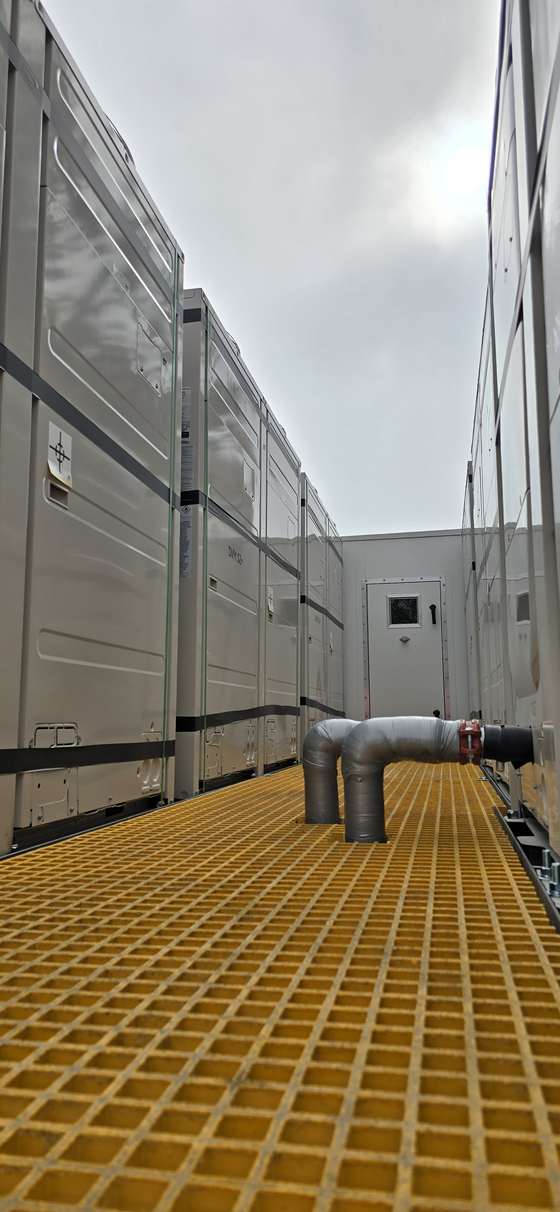
Modular Data Center Cooling
Cooling at the speed of compute.
Add cooling capacity when IT capacity is energized — not years before it is needed. A phased approach to schedule, capital and risk.
Modular Data Center Cooling
Add cooling capacity when IT capacity is energized — not years before it is needed. A phased approach to schedule, capital and risk.
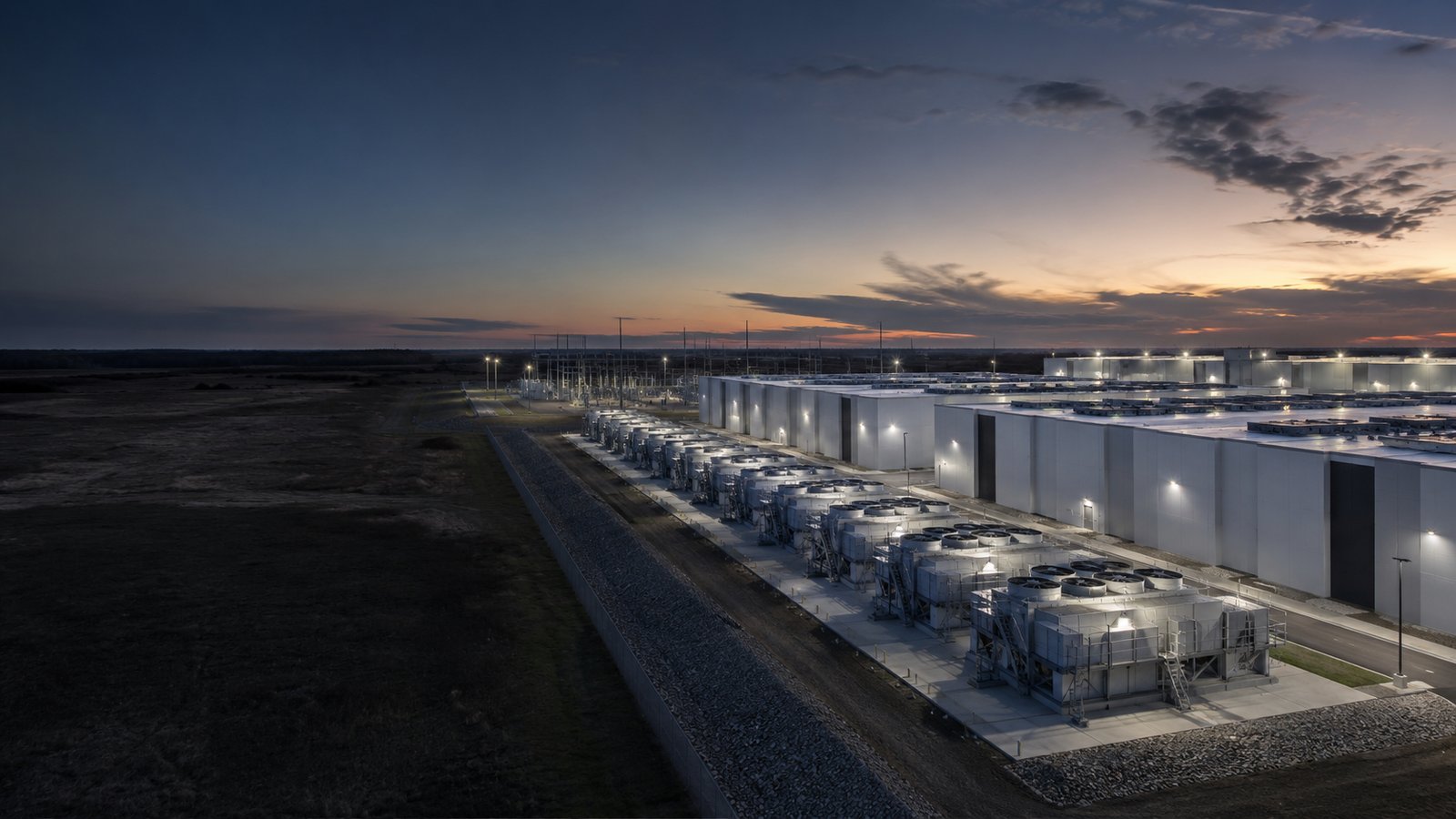
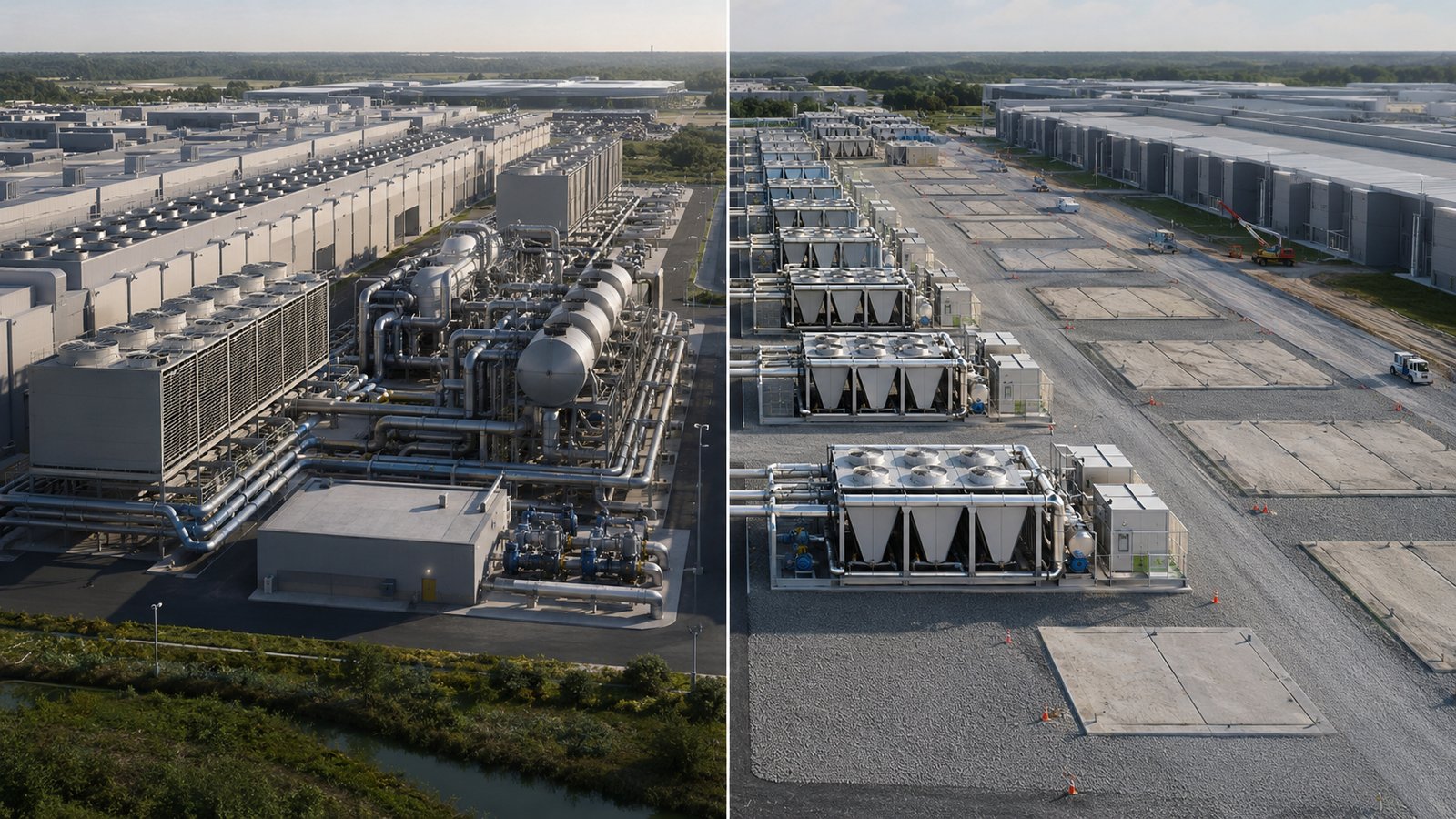
01 / Two ways to build
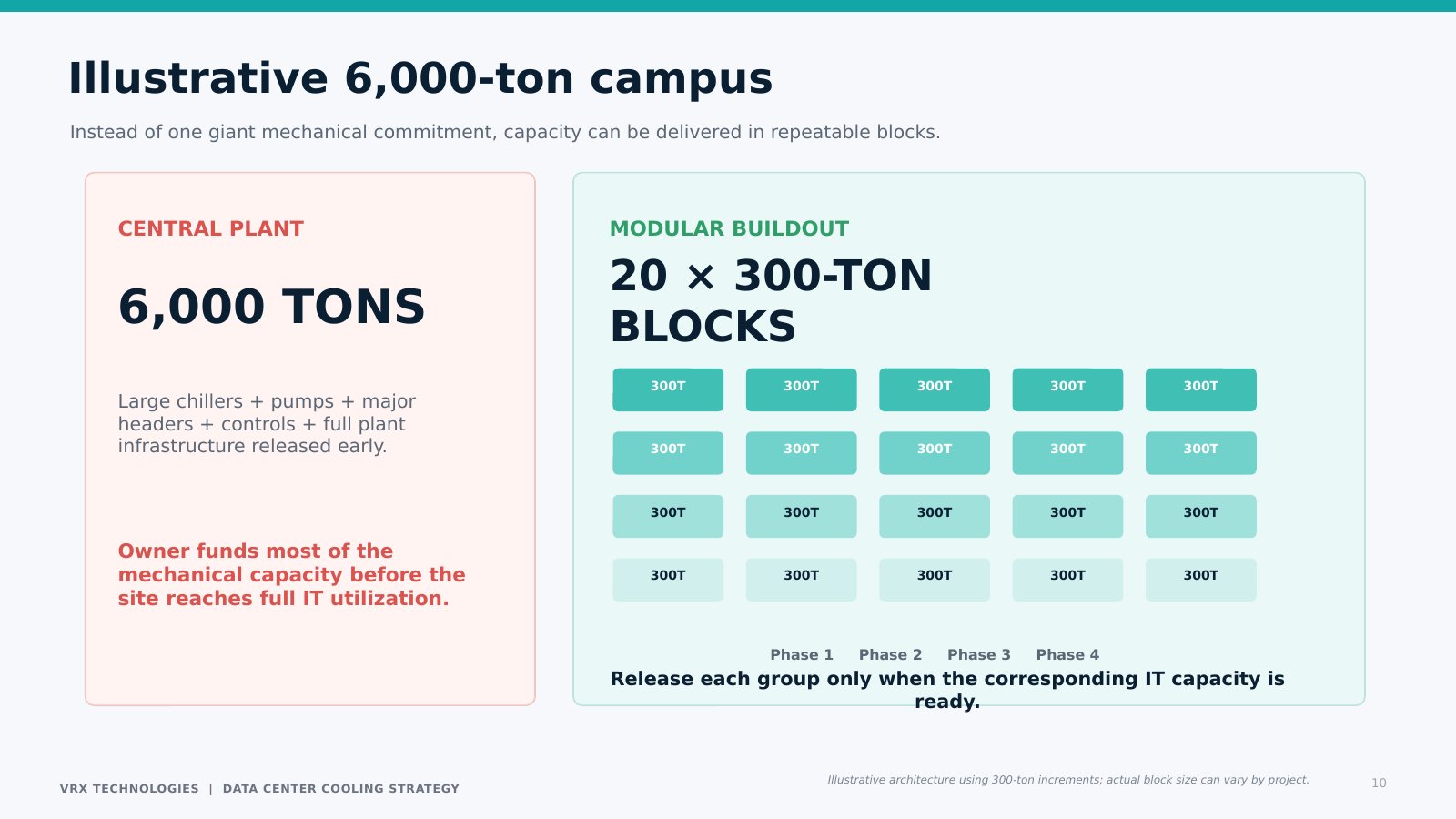
A conventional central plant is a large plant, a large piping network and a major day-one commitment. A modular plant is a repeatable block, added as load arrives. The ultimate tonnage can be identical; the schedule and the capital profile are not.
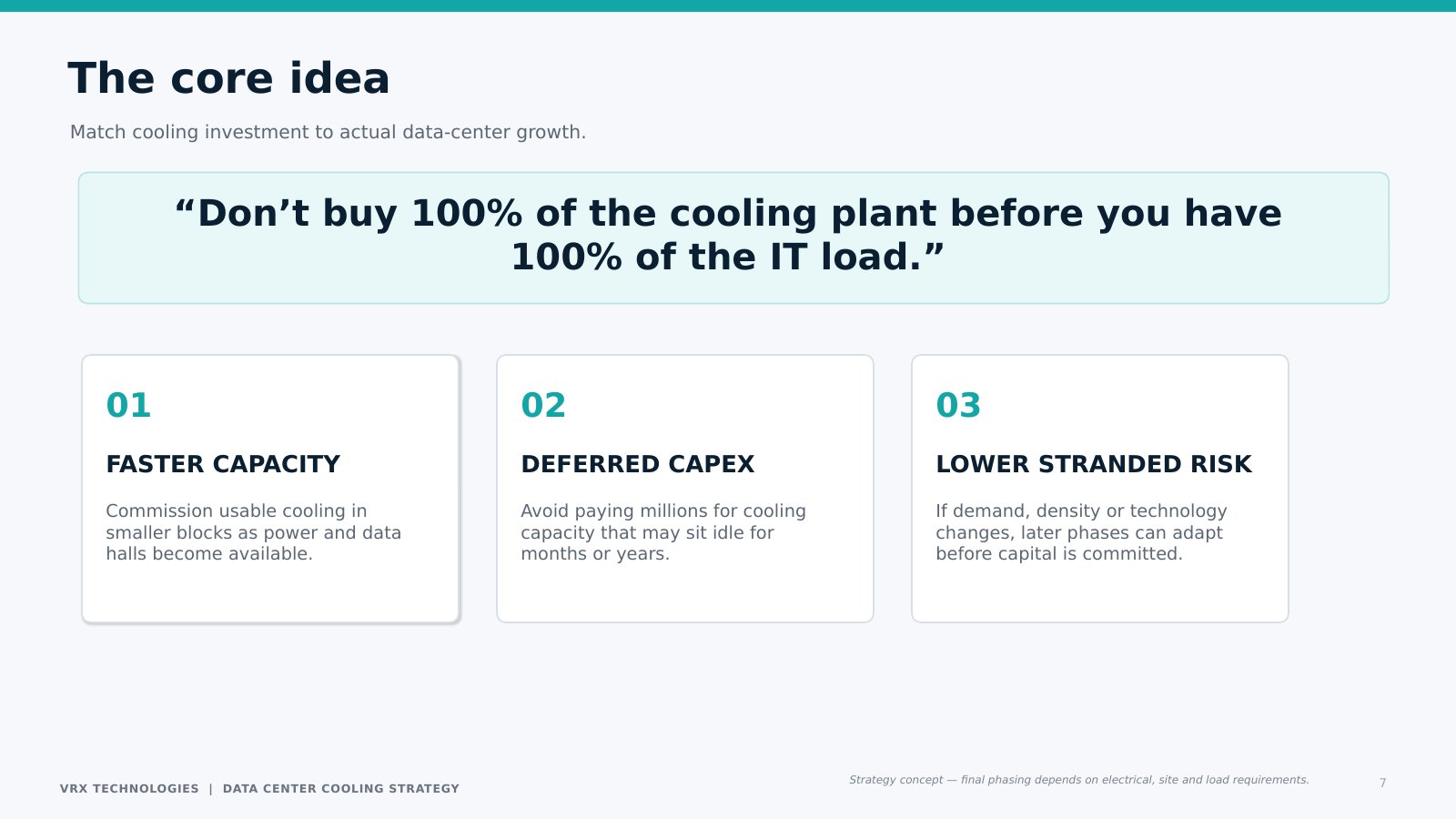
02 / The core idea
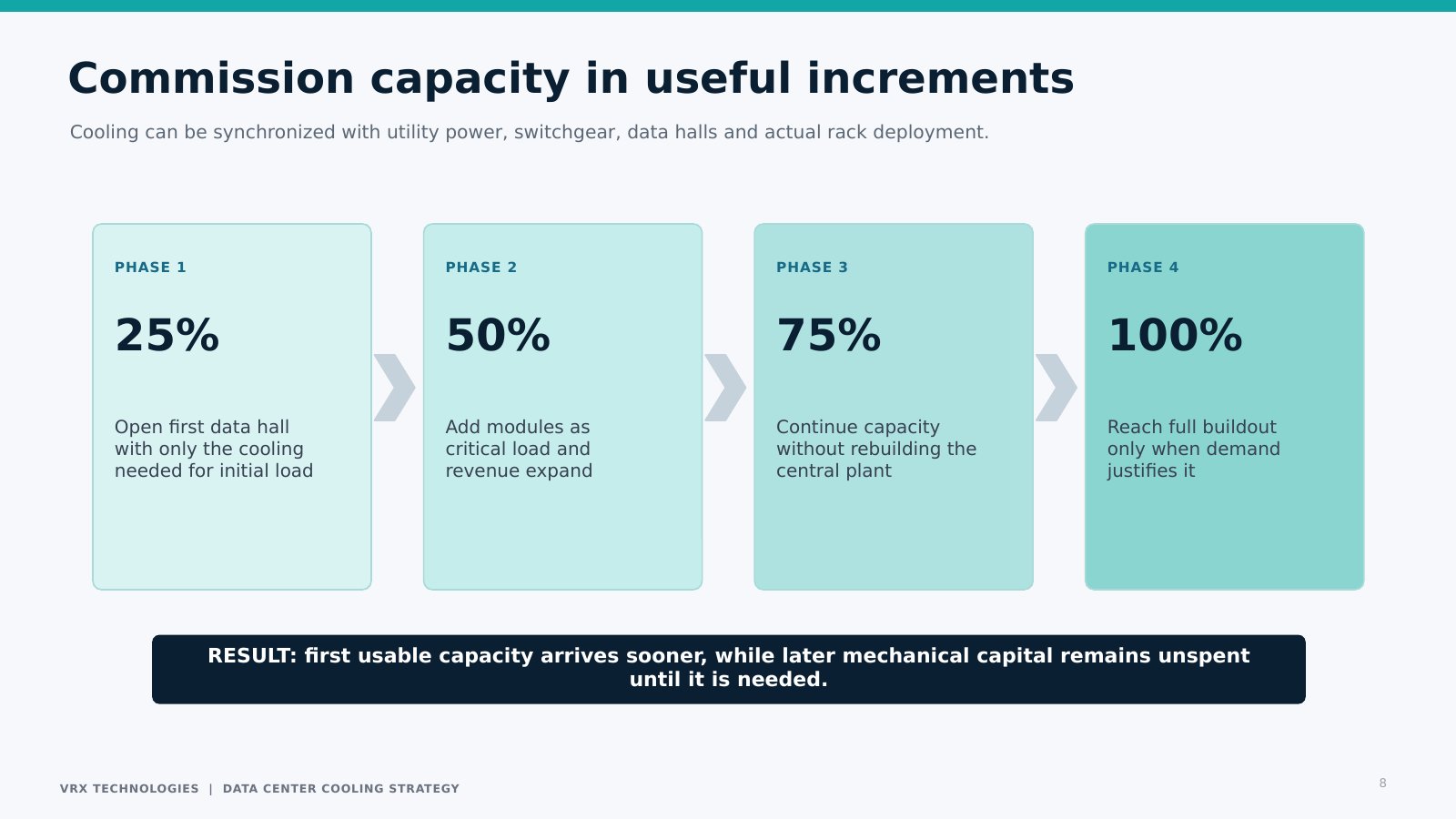
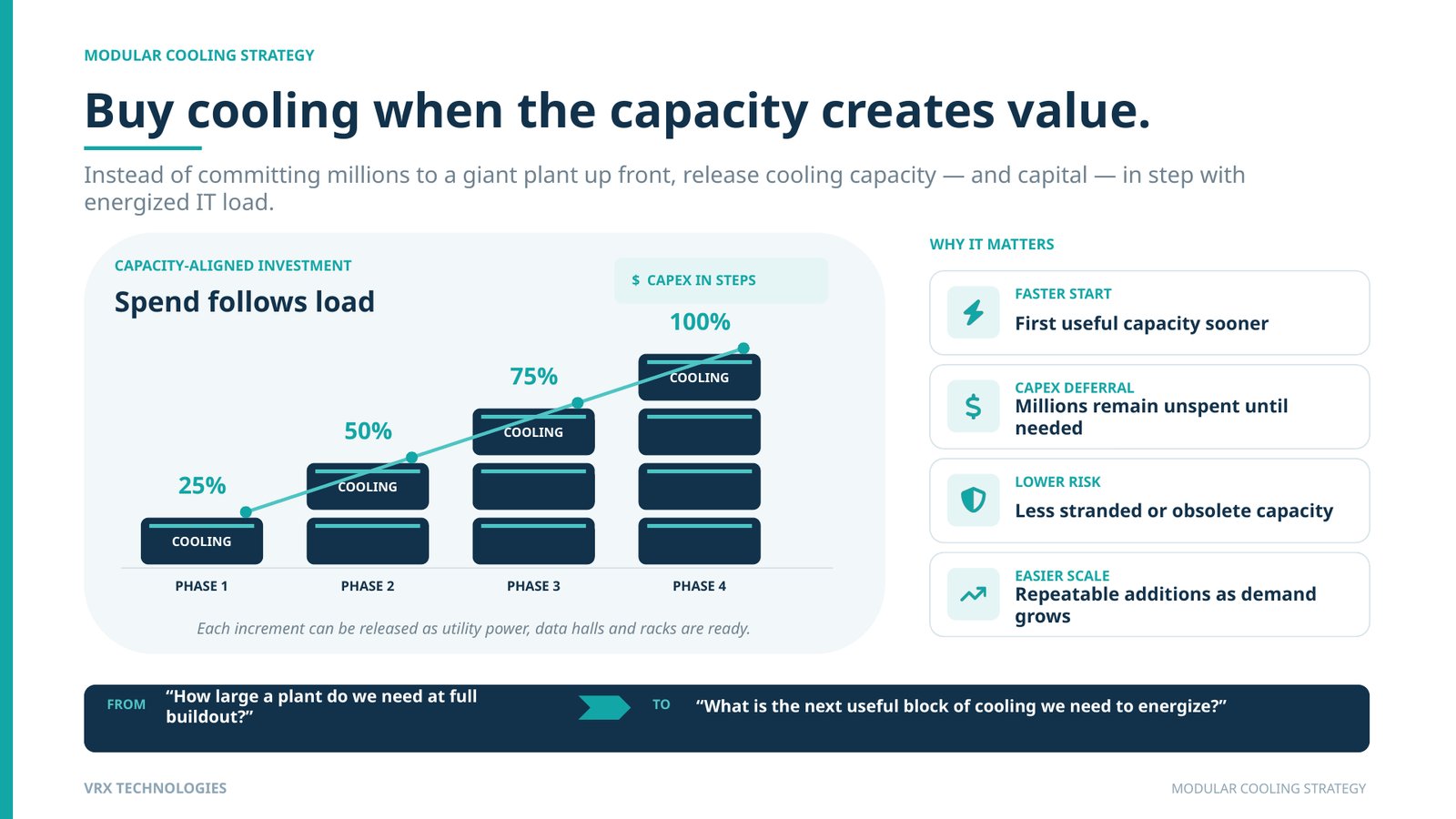
Match cooling investment to actual data center growth: usable capacity sooner, mechanical spending deferred until it is needed, and less stranded plant if density or technology changes.
03 / Capital
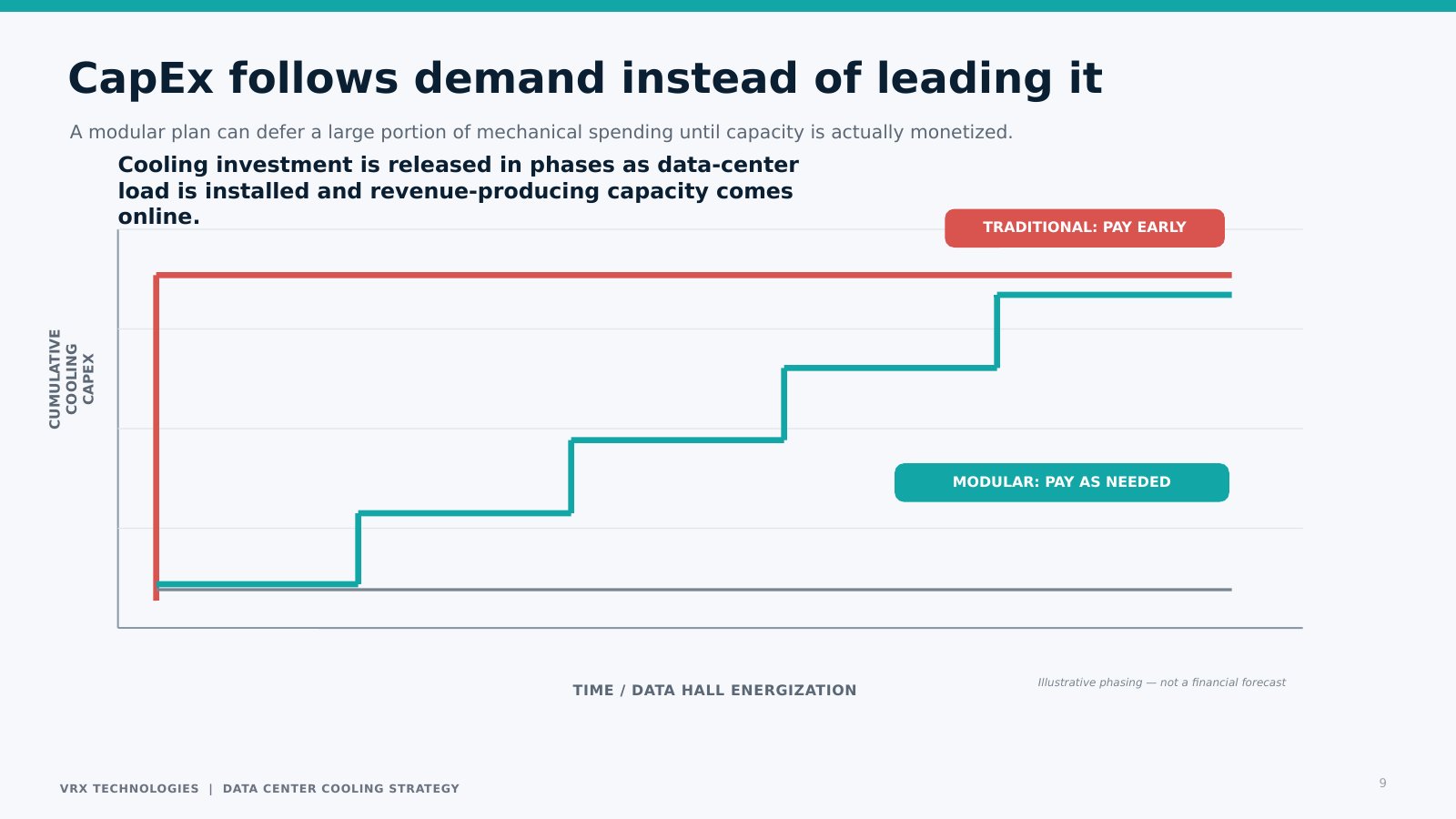
A central plant releases its full mechanical budget before the first rack draws power. Modular capacity is released in blocks as data halls are energized and start producing revenue. Deferring spend is not the same as guaranteeing a lower total installed cost — that depends on the project.
04 / Risk
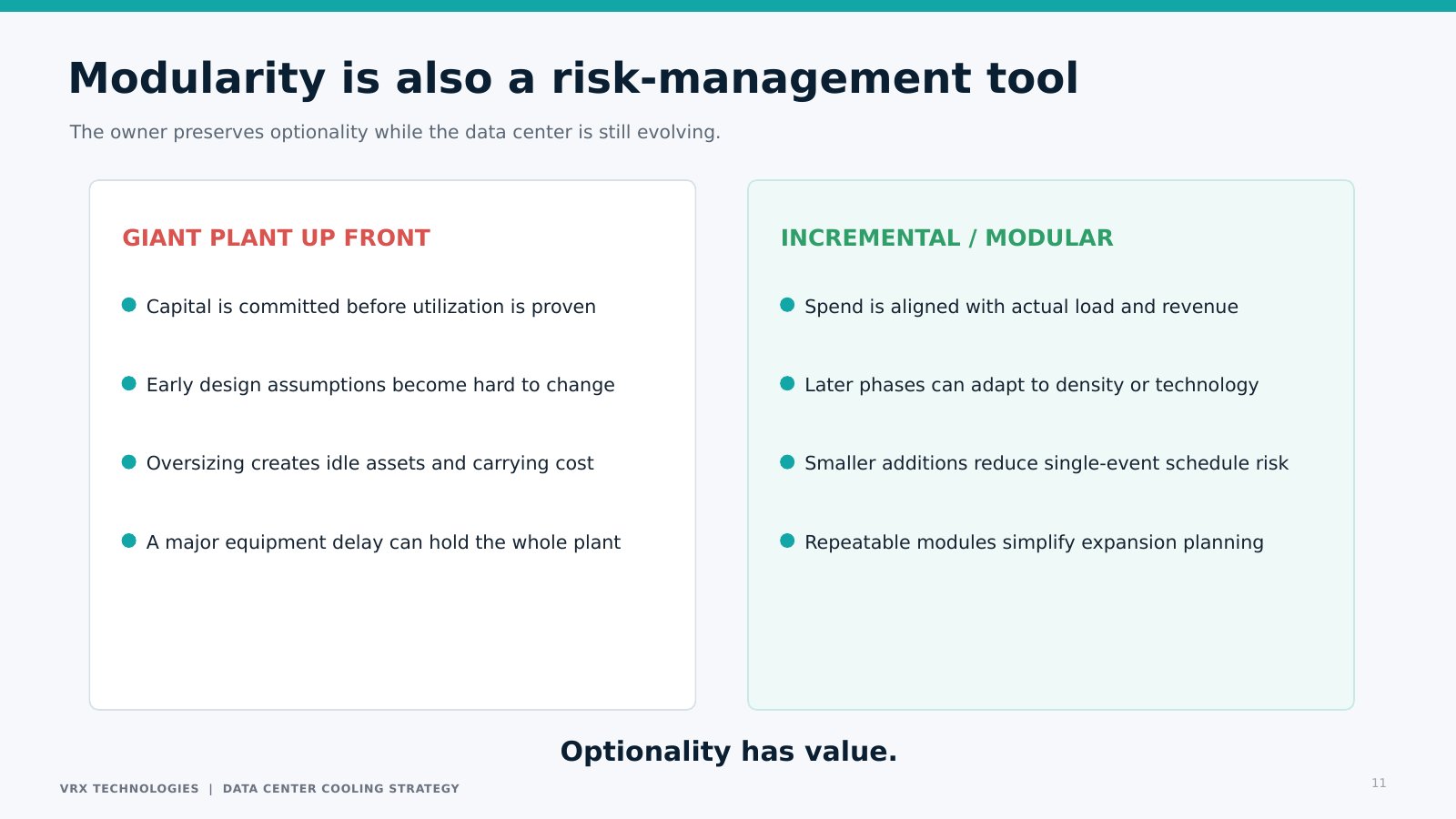
A giant plant commits capital before utilization is proven and locks in early design assumptions. Incremental blocks keep spending aligned with load, let later phases adapt to density or technology changes, and keep one equipment delay from holding the whole campus.
05 / Part load
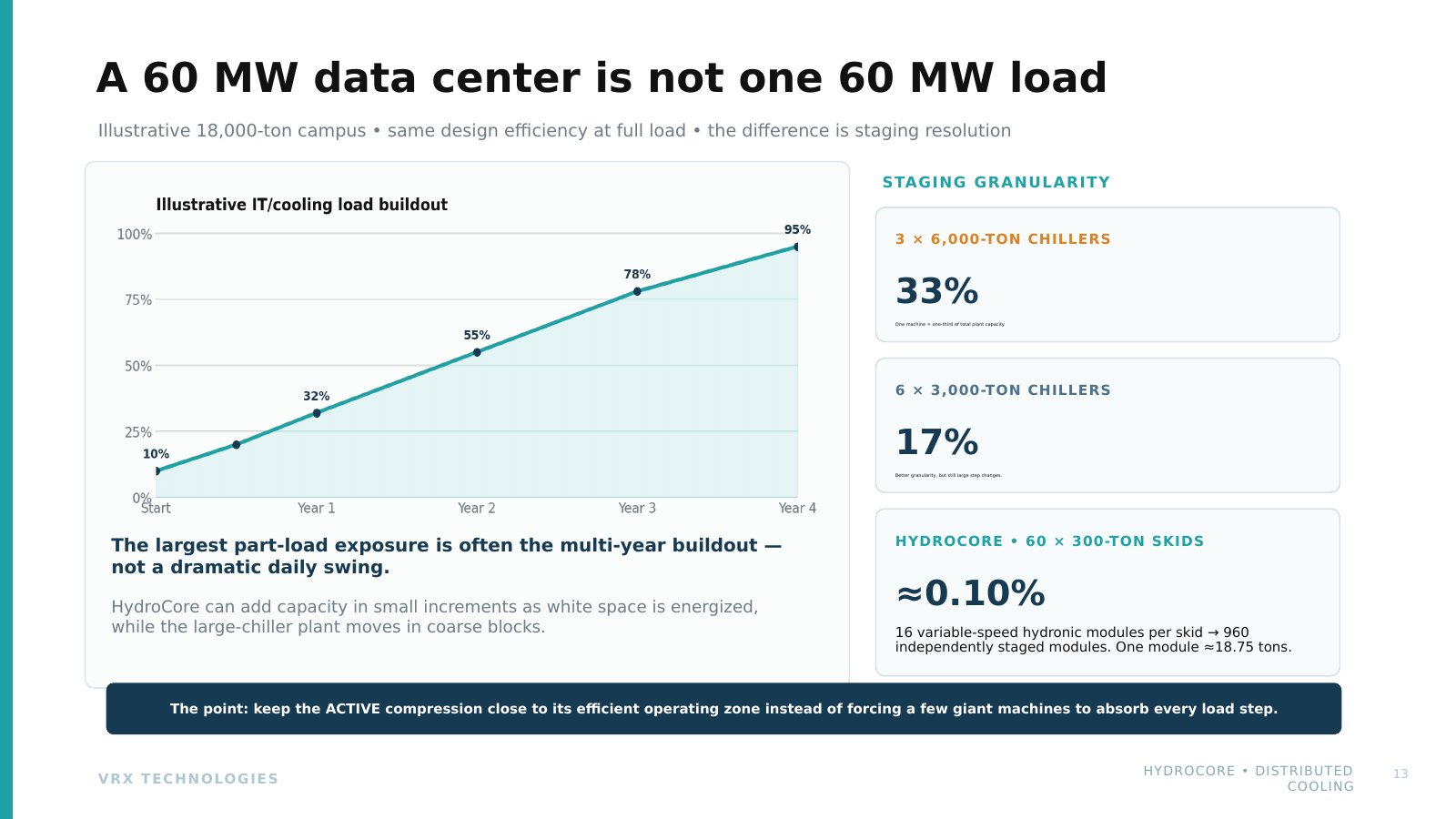
The largest part-load exposure is usually the multi-year buildout, not a daily swing. With three 6,000-ton chillers, one machine is a third of the plant. HydroCore stages in small increments — 60 skids of 16 variable-speed modules — so the active compression can stay close to its efficient operating zone as white space is energized.
06 / Architecture
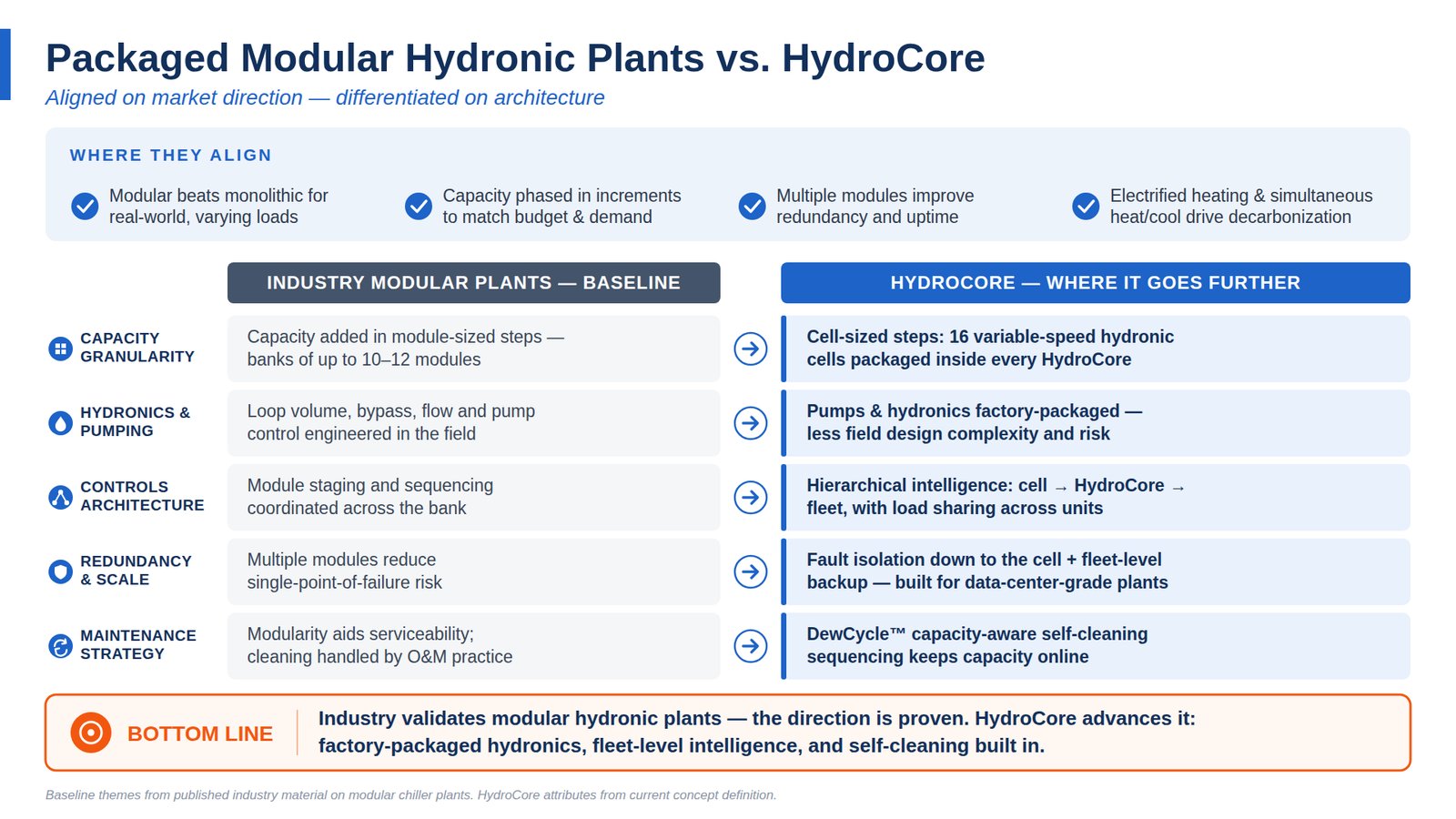
The industry has validated modular hydronic plants. HydroCore goes further: cell-sized capacity steps, factory-packaged pumps and hydronics, hierarchical controls from cell to fleet, fault isolation down to the cell, and DewCycle self-cleaning built in.
07 / DewCycle / Patent pending
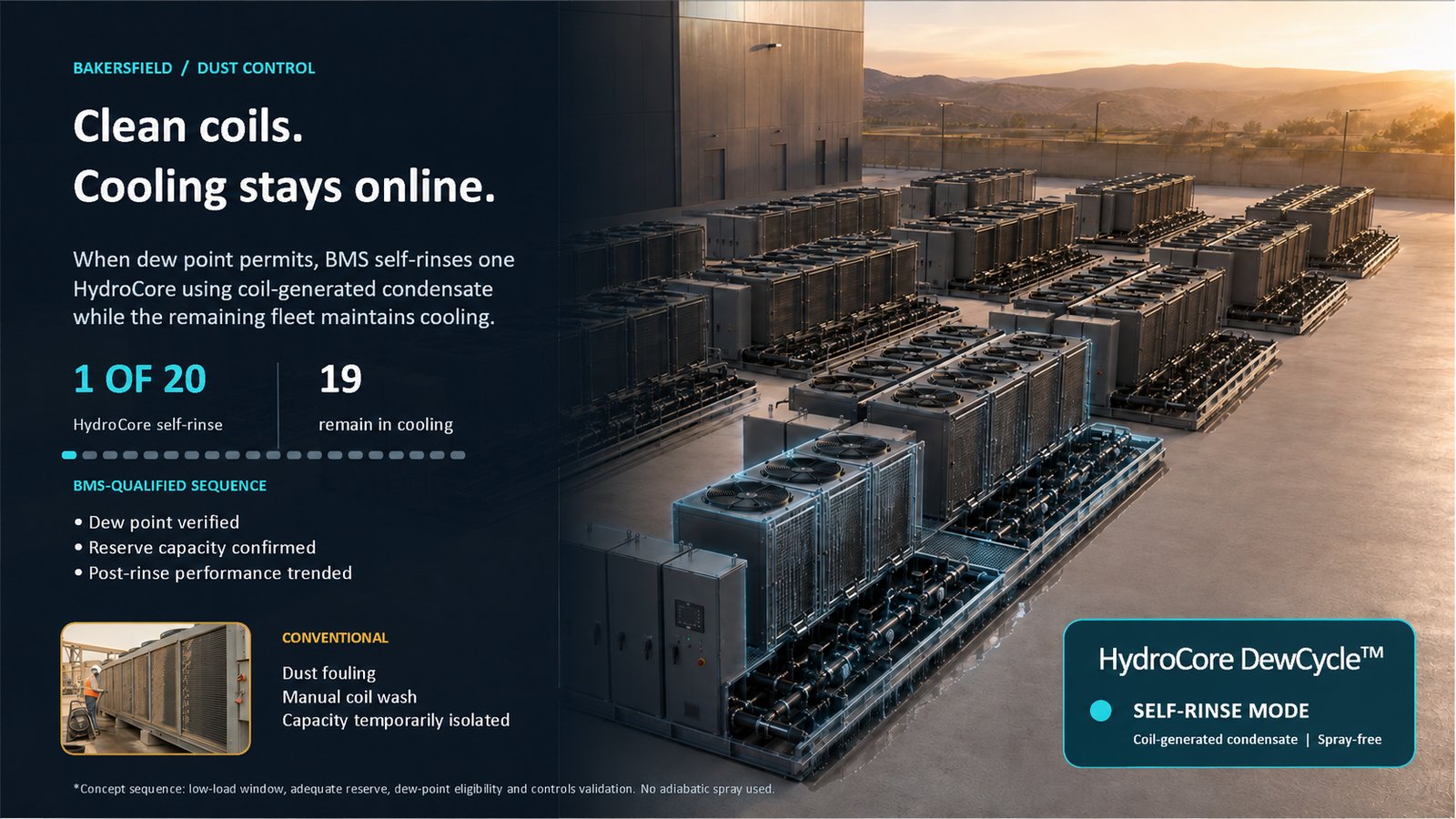
When dew point permits, the BMS self-rinses one HydroCore at a time using coil-generated condensate while the remaining fleet keeps cooling. Performance is measured before and after each cycle. Results depend on regional dust and pollen, coil condition and available dew-point windows; manual service may still be needed.
08 / Sound & Community
Water and power get the headlines. At night, community noise can decide how well a data center fits its neighborhood. Cooler night air and fleet diversity let HydroCore spread the load across more modules at lower speed after dark.
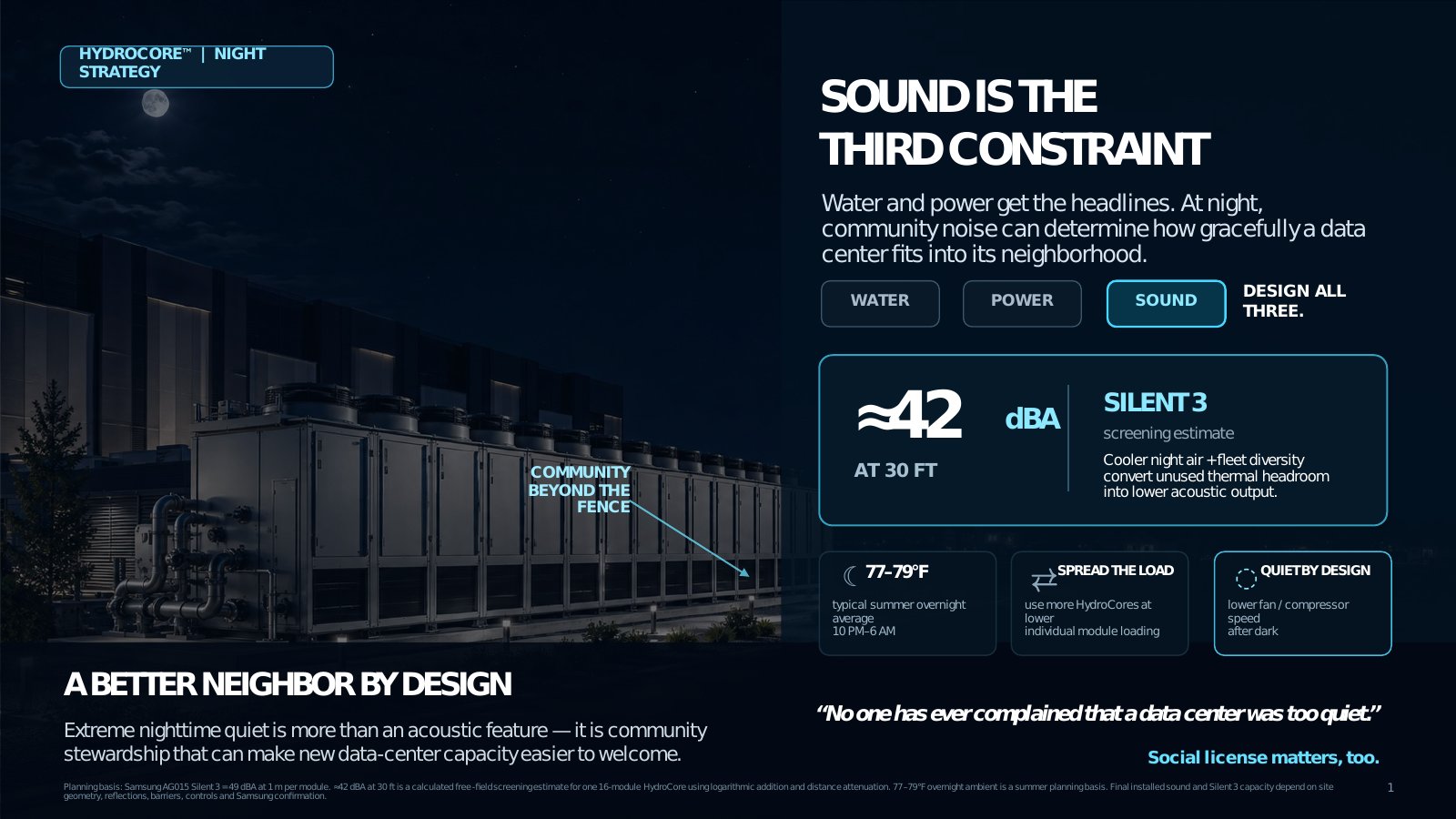
The ≈42 dBA at 30 ft shown above is a night-time Silent 3 screening estimate at reduced module loading. The published HydroCore 1 MW acoustic basis is the design reference for rated and quiet-mode sound levels.
09 / Outside air / Cascade
Cascade addresses the campus outside-air requirement in hot, dry climates. It complements the HydroCore cooling platform with a dedicated approach to conditioning 100% outside air.
10 / Written for the reviewer
Our platform supports the principal U.S. data center energy‑code pathways — ASHRAE 90.1, ASHRAE 90.4 and California Title 24 computer‑room provisions.
We will not tell you a product is compliant. Adoption, amendments and local enforcement vary, and every project needs its own engineering validation and authority review. What we will do is hand your design team the analysis in the form they have to defend it in.

A load profile, a water restriction, a noise ordinance or a phasing plan. You will hear back from someone who can read it and tell you what the platform does about it.