VRX Technologies

Solutions

Electrify at end of life. Stay inside the electrical envelope.

One design constraint runs through everything we build: replace legacy gas equipment when it is due anyway — without a service upgrade, a switchgear project, or a building that has to shut down.
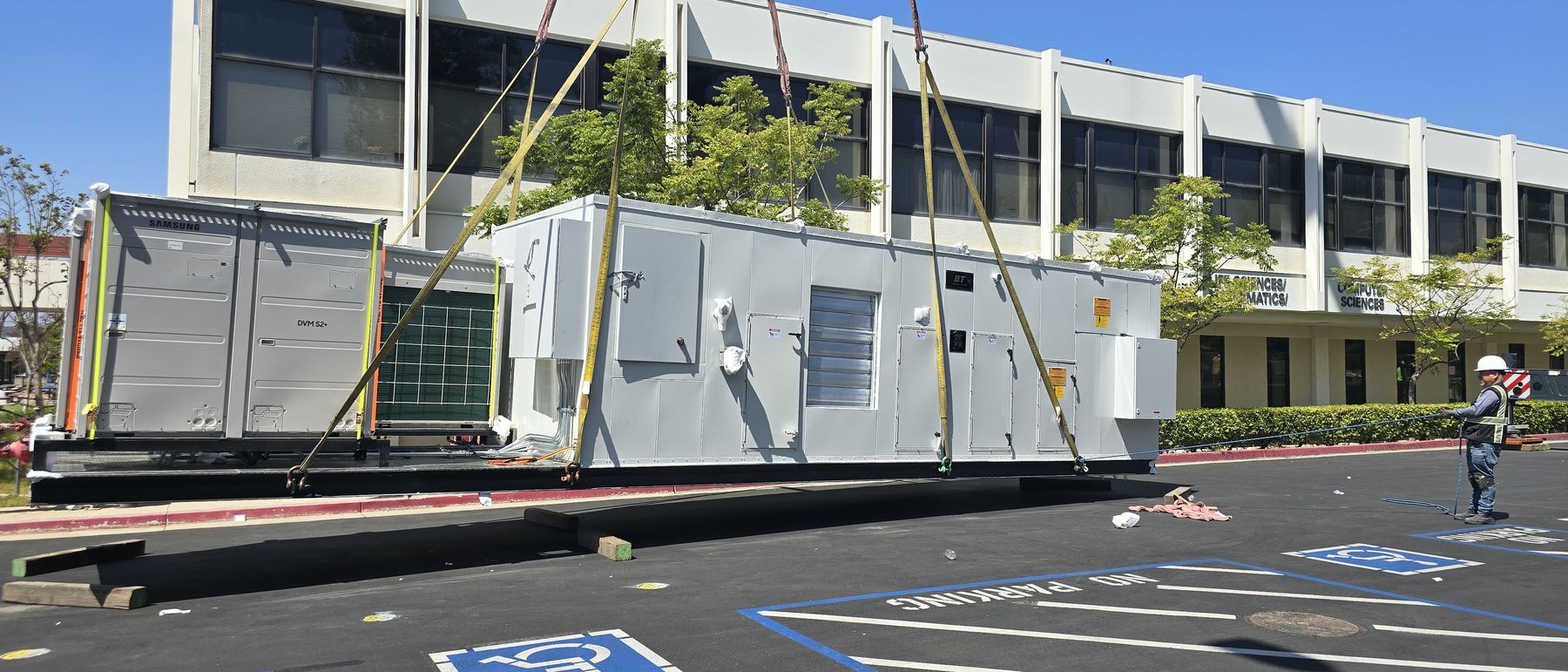
Two all-electric replacement rooftop units staged in the parking lot of an occupied office building before the lift
Replacement units staged at an occupied building
01 / Rooftop electrification

The units nobody else wants to touch.

Multi‑zone and dual‑deck gas/electric rooftops are the hardest equipment in any building to electrify, because they were only ever wired for cooling. Three engineered approaches, selected by what is actually on your roof.

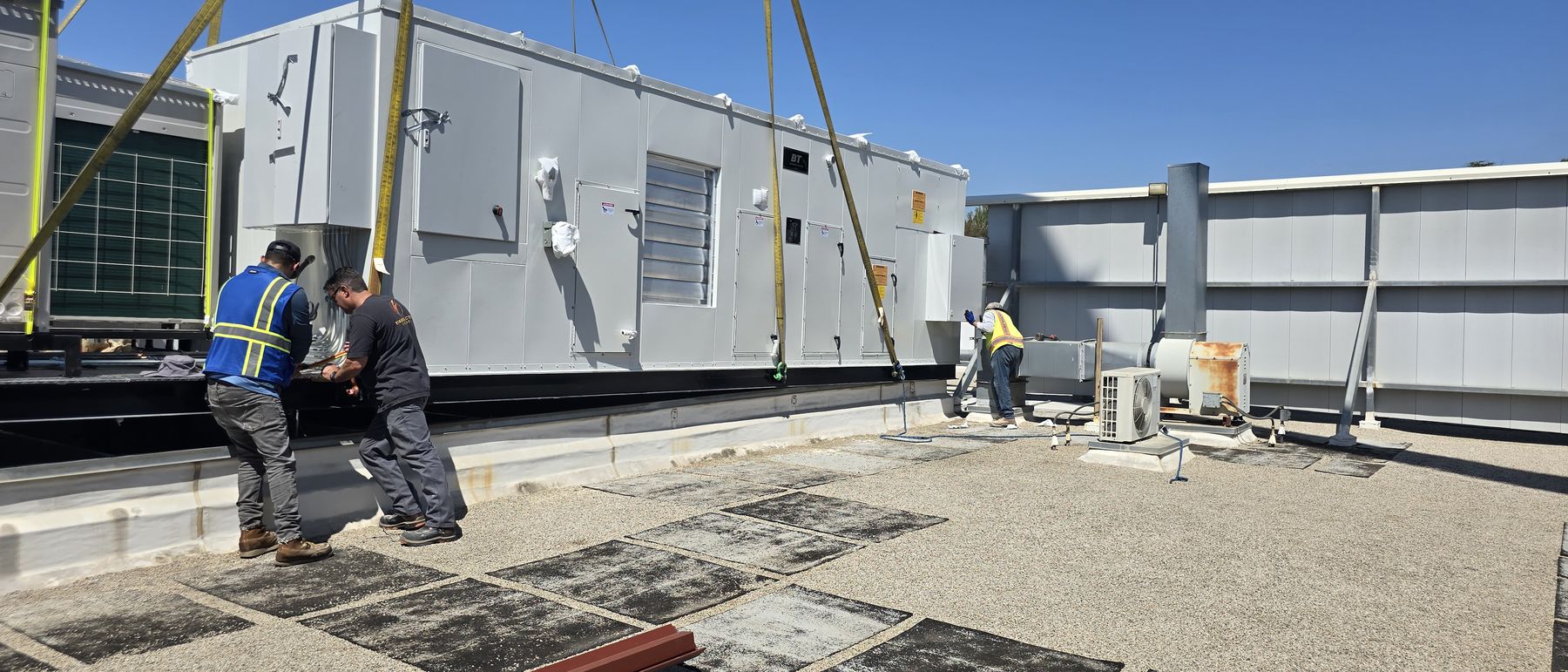
Crew guiding a replacement rooftop unit down onto the existing curb
Onto the curb that was already there

02 / Large rooftops

VRX-RTU — retire the boilers with the rooftops.

For 80–200 ton rooftop units serving VAV reheat or active chilled beam systems. Done at the moment the rooftops are replaced, the building’s gas boilers can be retired at the same time — without adding a single amp to connected power.

One rooftop unit consolidates what is normally five separate systems, in the footprint the old unit already occupied.

Replacement range80–200 tons
Added electrical loadNone vs. replaced units
Curb & ductworkRetained
Replacement windowDesigned for 8 hours
Power & controlsSingle point · factory integrated
Downstream systemsVAV reheat / chilled beam
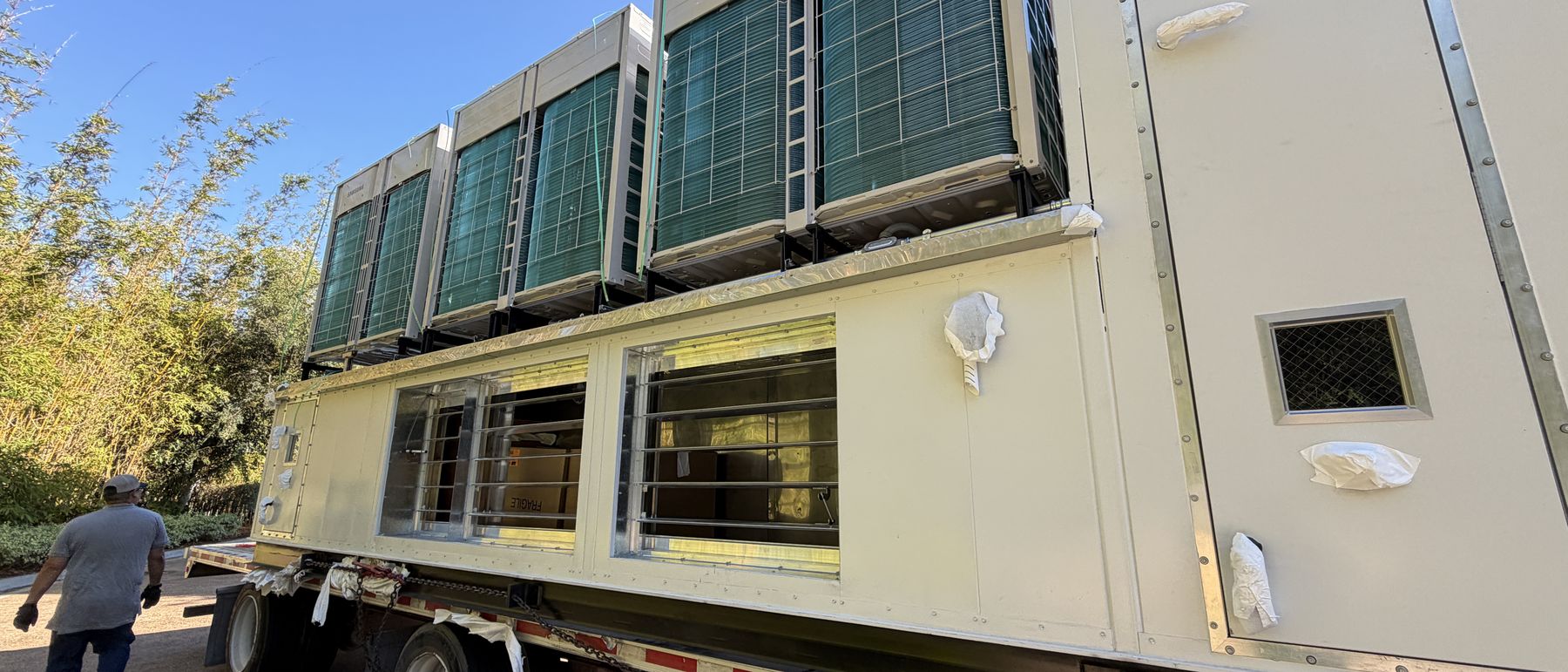
Large packaged rooftop unit arriving by flatbed alongside a multi-storey office building
80 to 200 tons, delivered to an occupied building

03 / Hydronic systems

HydroLoop — the building heats itself.

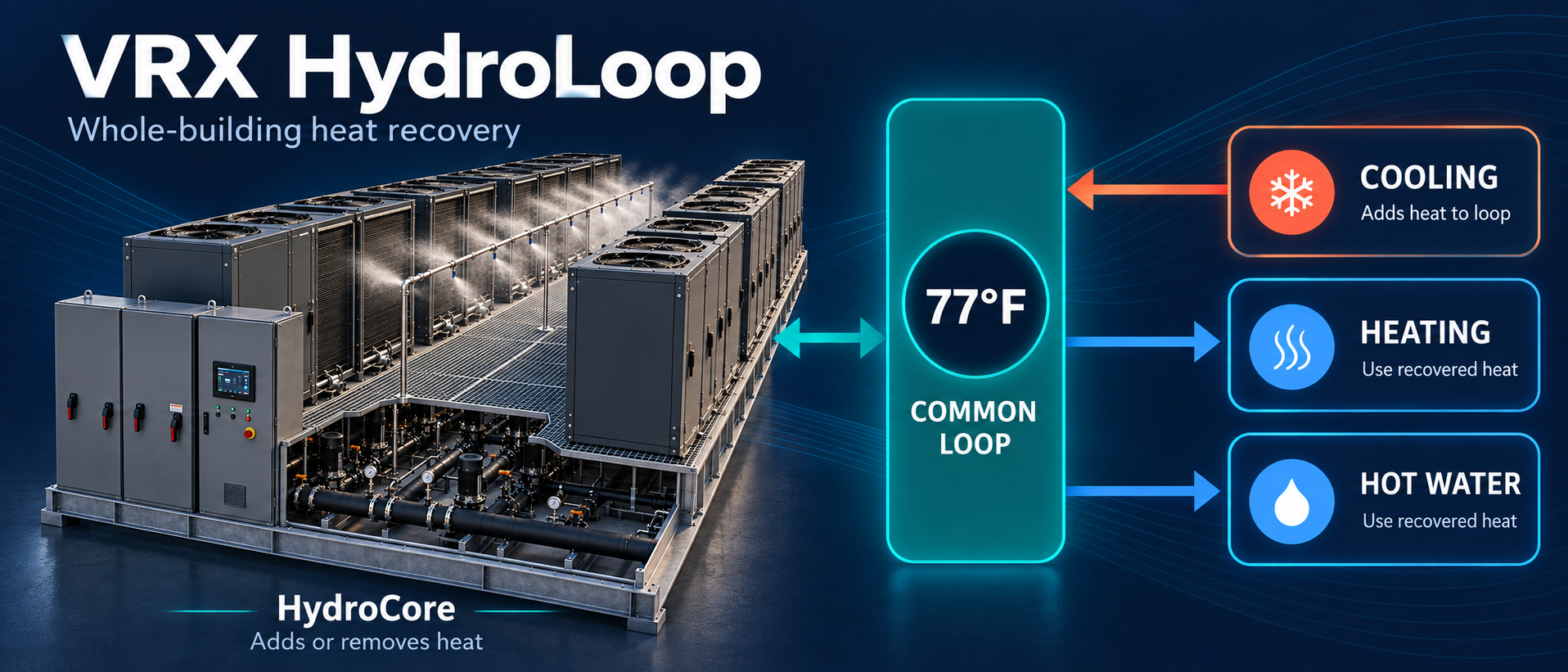
Heating, cooling and domestic hot water on a single heat‑recovery loop. The cooling tower goes, the gas boiler goes, the water treatment program goes, and every room gets its own control.

20–300 ton hydronic plants with glycol‑free free cooling down to −13°F — without the pumping penalty, heat‑transfer derate and maintenance burden of a glycol loop.

Capacity range20–300 tons
Free coolingGlycol-free, to −13°F
Adiabatic assistOptional
Zone controlRoom by room
ApplicationsExisting · new hydronic plants
HydroCore connected to a 77-degree Fahrenheit common loop, recovering cooling heat for heating and hot water
HydroCore & HydroLoop — whole-building heat recovery

Water-source heat pump buildings

WSHP Electrification — three plants become one.

Keep your existing water-source heat pumps. HydroCore replaces the cooling tower and gas boiler that hold the loop, and a heat pump makes domestic hot water from the same loop.

04 / Dedicated outdoor air

Cascade — 100% outside air in hot, dry climates.

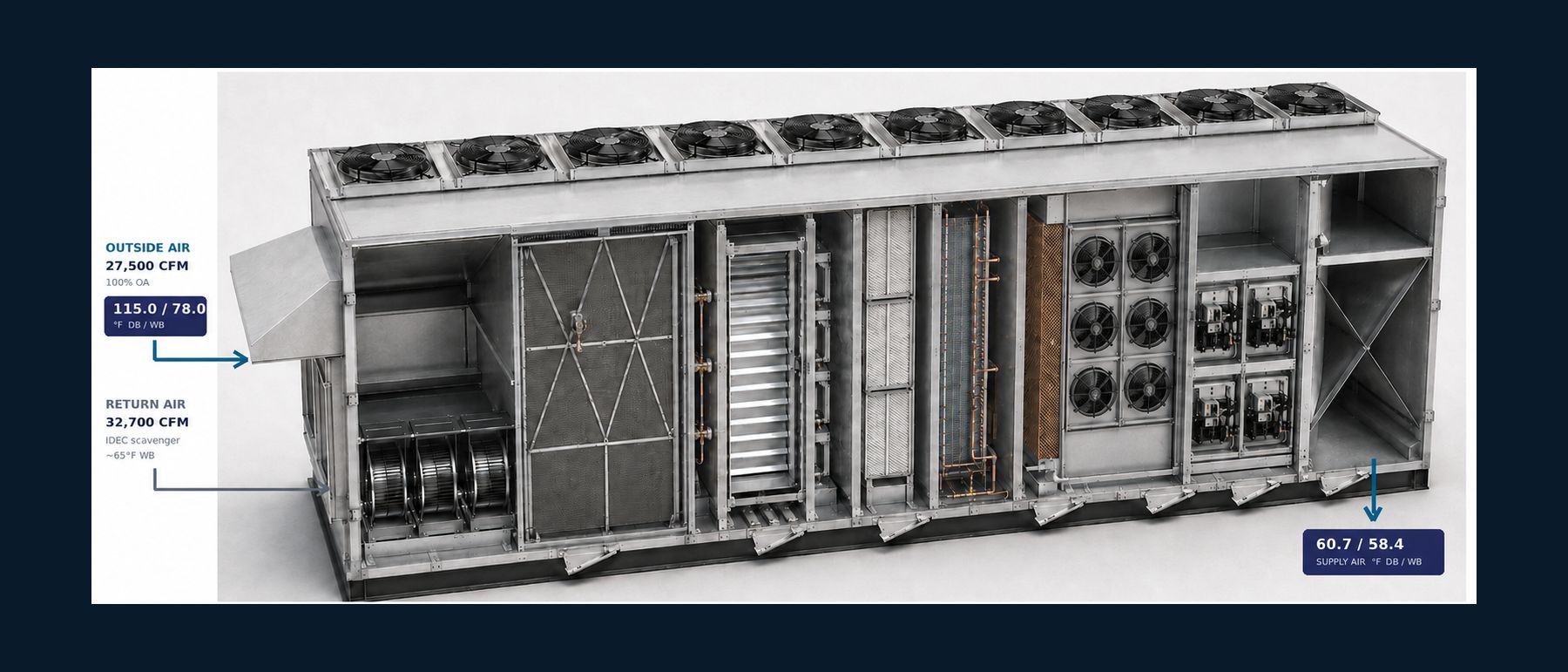
For large‑scale DOAS and data center outside‑air loads. Dry, neutral supply air at design conditions to 115°F, with a third to nearly half less mechanical cooling and no electric reheat coil on the schedule.

Cutaway rendering of a dedicated outdoor air unit showing each air-handling section in sequence
Cascade DOAS — rendering

Pressure De-Coupled / Comfort cooling series

Introducing VRX LatentZone.

Central dehumidification. Individual zone comfort. Full mixed-air dehumidification with recovered-heat reheat at each zone and factory-integrated controls.

Not sure which one fits your building?

Send the equipment schedule and what the electrical room has left. We will tell you which approach applies and what the connected load looks like afterward.