Electrify both decks. Keep the breaker you already have.
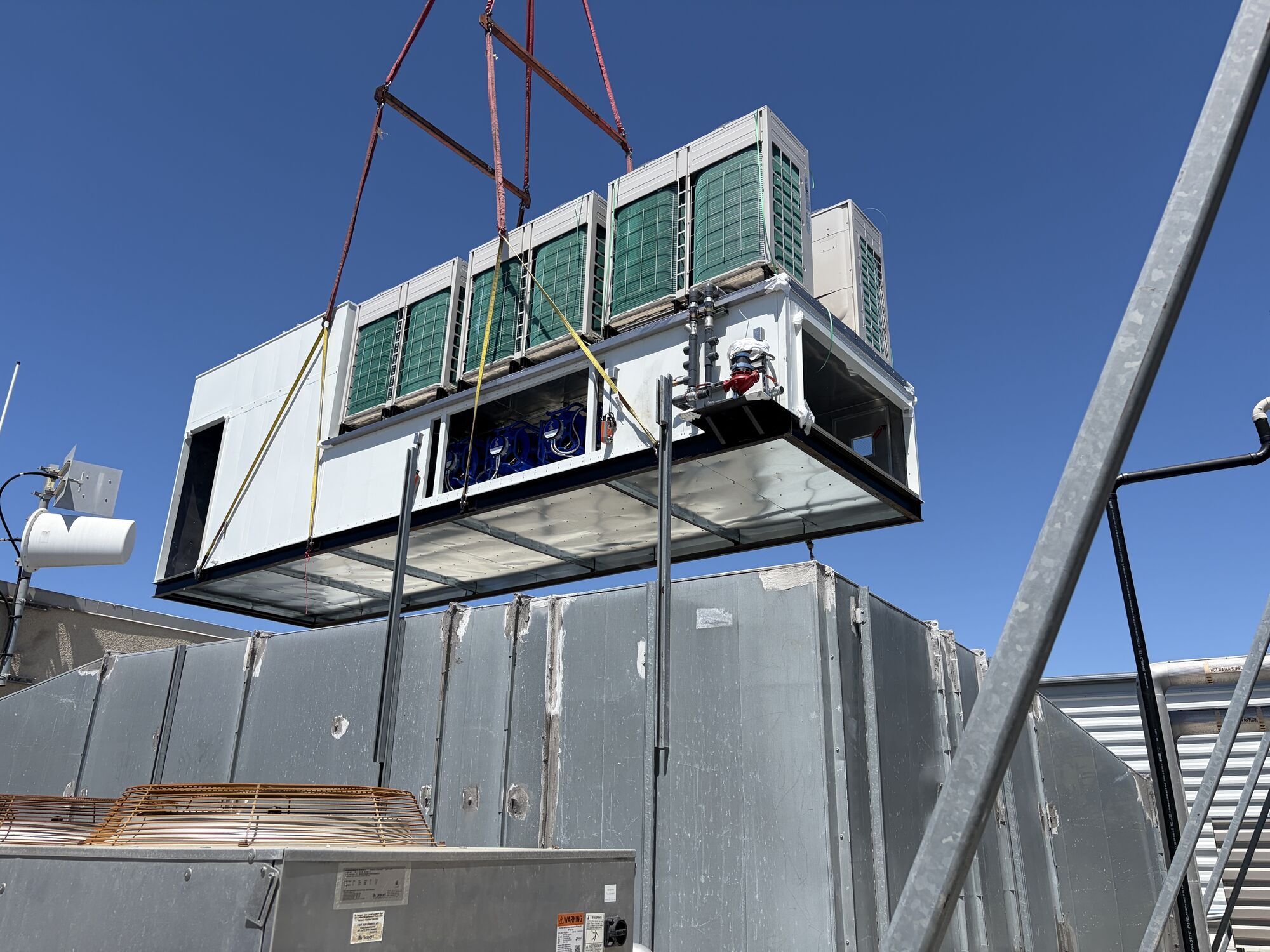
A dual‑deck rooftop was wired to run one deck. Electrify the other the conventional way and the nameplate outgrows the feeder, and an equipment replacement turns into an electrical project. PowerGuard is the approach that keeps the project on the roof.
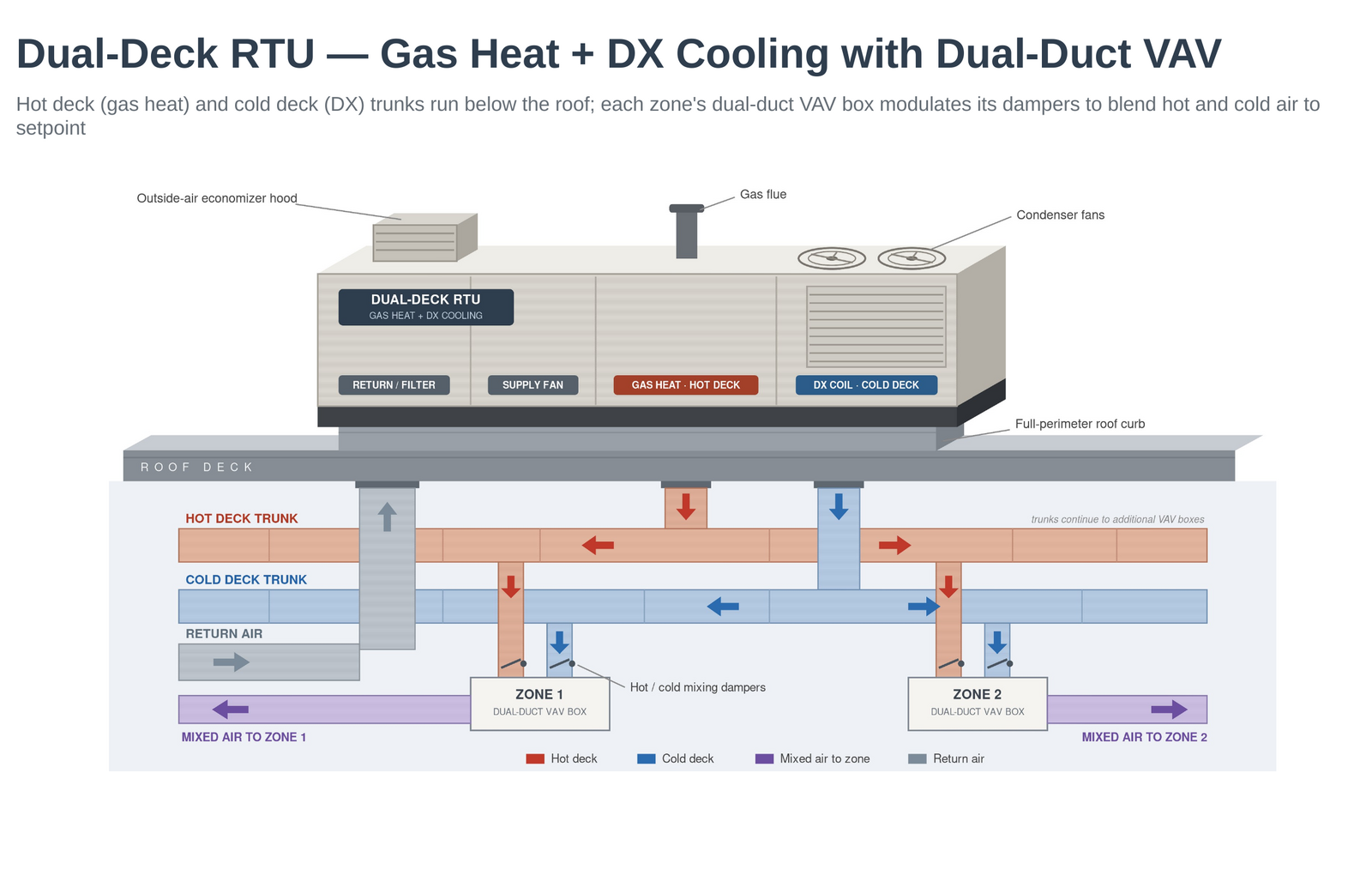
A dual‑deck unit runs a hot deck and a cold deck at the same time and blends them at each zone. That is what makes it comfortable in a building with wildly different loads on the same air handler — and it is exactly what makes it the hardest unit in the building to electrify.
The cold deck was always electric. The hot deck was gas, so it cost the electrical service almost nothing. Convert the hot deck to a heat pump the conventional way and both halves now draw power at once, so the calculated load can land well above the feeder and breaker serving the unit today.
The building does not need a bigger service. It needs the replacement to stay inside the one it has.
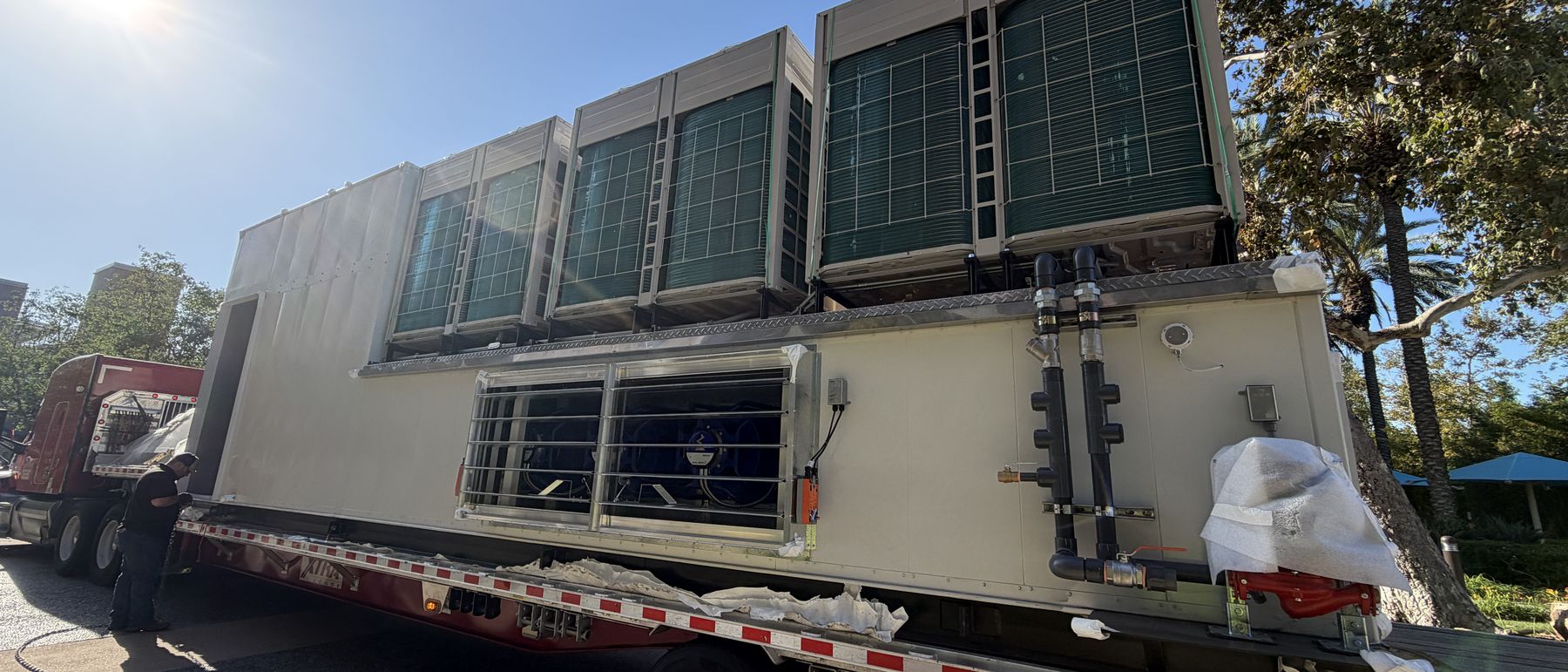
Illustrative — a legacy dual deck: gas hot deck, DX cold deck, blended at every zone
02 / What PowerGuard does
The nameplate goes up. The operating current does not.
PowerGuard is demand and load management engineered into the replacement package. Both decks become electric, and what the unit is actually allowed to draw stays inside the electrical capacity that is already there.
A dual deck is rarely asked for full heating and full cooling at the same moment, and the building is never asked to prove that it is. PowerGuard manages the unit against real conditions instead of assuming the worst case runs all day — so the feeder, the breaker, the switchgear and the utility service can stay exactly as they are.
What that buys you is schedule. The project stops depending on a utility upgrade queue and goes back to being an equipment replacement you can plan around.
No service upgrade application, and no schedule that belongs to the utility rather than to you.
Electrical
Feeder and gear
The feeder, the breaker and the switchgear serving the unit stay where they are.
Roof
Curb and duct
Built around the opening already on the roof, so the ceilings below stay closed.
Occupancy
The building
Tenants stay, the building keeps running, and the work happens in a window you can schedule.
Four scopes that stay closed
04 / Not a building automation setting
Hardware you can point at, not a sequence somebody can edit.
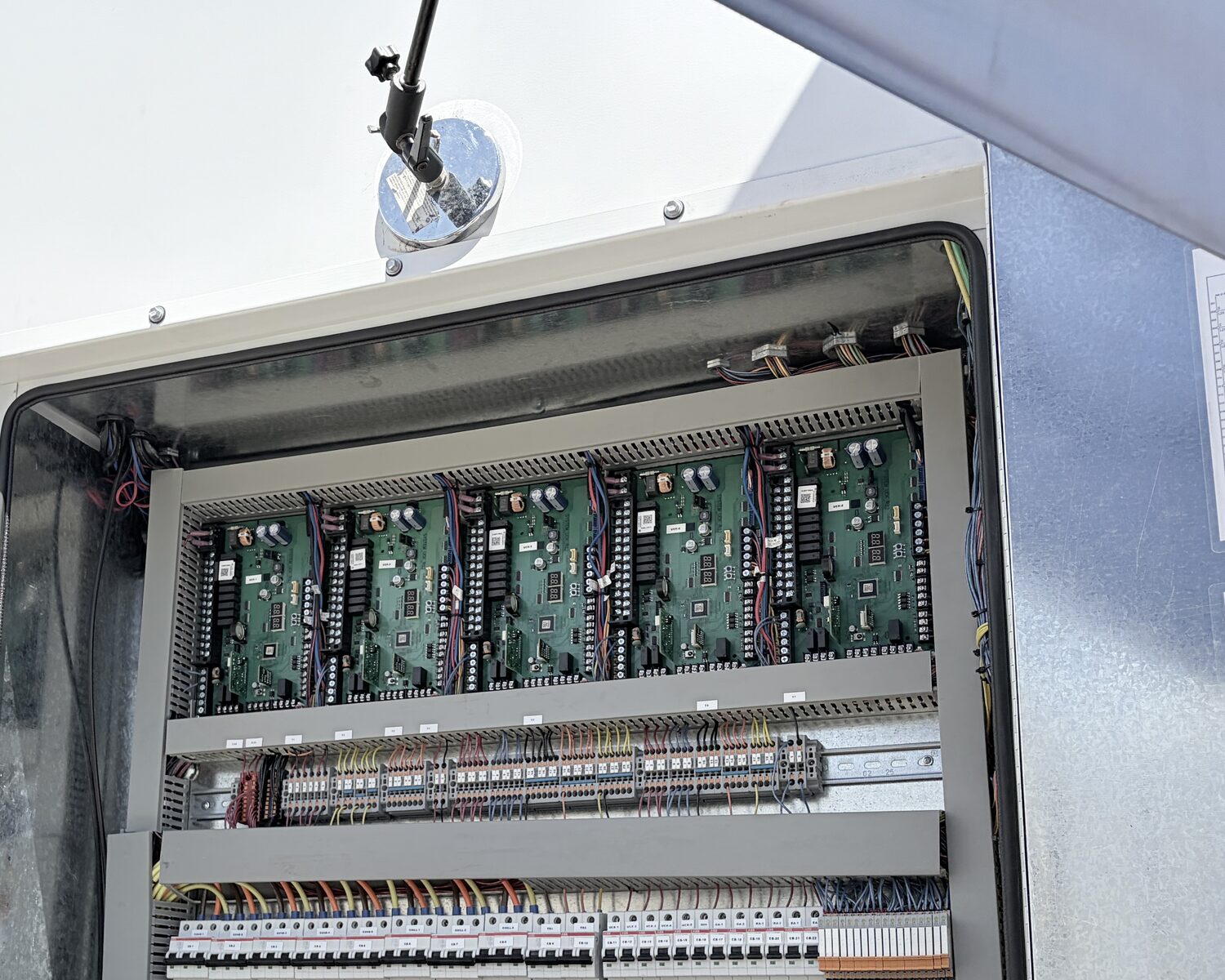
The whole premise here is an electrical claim, so the thing making it is dedicated, listed hardware that ships as part of the equipment package — not a setpoint in the building automation system that a future technician can widen on a hot afternoon.
Setpoints are locked, field adjustment is restricted, and the building automation system gets status and alarms rather than control. That distinction is the difference between an argument a plan checker accepts and one they do not.
Factory wired, listed and commissioned as part of the unit
05 / Where it fits
Dual deck, multi deck, and the large packaged units nobody wants to touch.
Dual deck
Hot deck and cold deck
The classic case: simultaneous heating and cooling from one machine, where electrifying the hot deck is what breaks the electrical budget.
Simultaneous loads
Multi deck
Triple and shoulder deck
Units carrying a third deck for shoulder‑season conditions, with the same non‑coincident load behaviour and the same electrical ceiling.
Non-coincident loads
Large packaged
Nameplate over the breaker
Any large packaged retrofit where the all‑electric selection calculates past the feeder that is already in the building.
Existing service
Multi‑zone rather than dual deck? Up to eight zones, see Pressure De-Coupled. More than eight, or zones heating and cooling at once, see Reverse Polarity.
Dual deck, multi deck and large packaged units
06 / Written for the reviewer
An electrical claim, documented like one.
PowerGuard only helps you if your engineer can defend it, so the deliverable is not just equipment. Your design team gets the load analysis, the coincidence basis and the operating documentation in the form a plan checker expects to read them.
We will not tell you a product is code‑compliant. Adoption, amendments and local enforcement vary, and every project needs its own engineering validation and authority review.
Tell us what the dual deck is, what the feeder and breaker are, and what the building actually does in a day. We will tell you whether it electrifies inside the service you already have.