Make useful energy go further.
Move heat efficiently and recover it where loads overlap. Evaluate operating costs against local rates and actual load profiles.
THE VRX APPROACH / LOW-IMPACT DECARBONIZATION
Electrify existing HVAC without making the building itself the next construction project.
VRX engineers around existing infrastructure, electrical limits and occupied spaces—so the path away from fossil-fuel heating can become a project owners can execute.
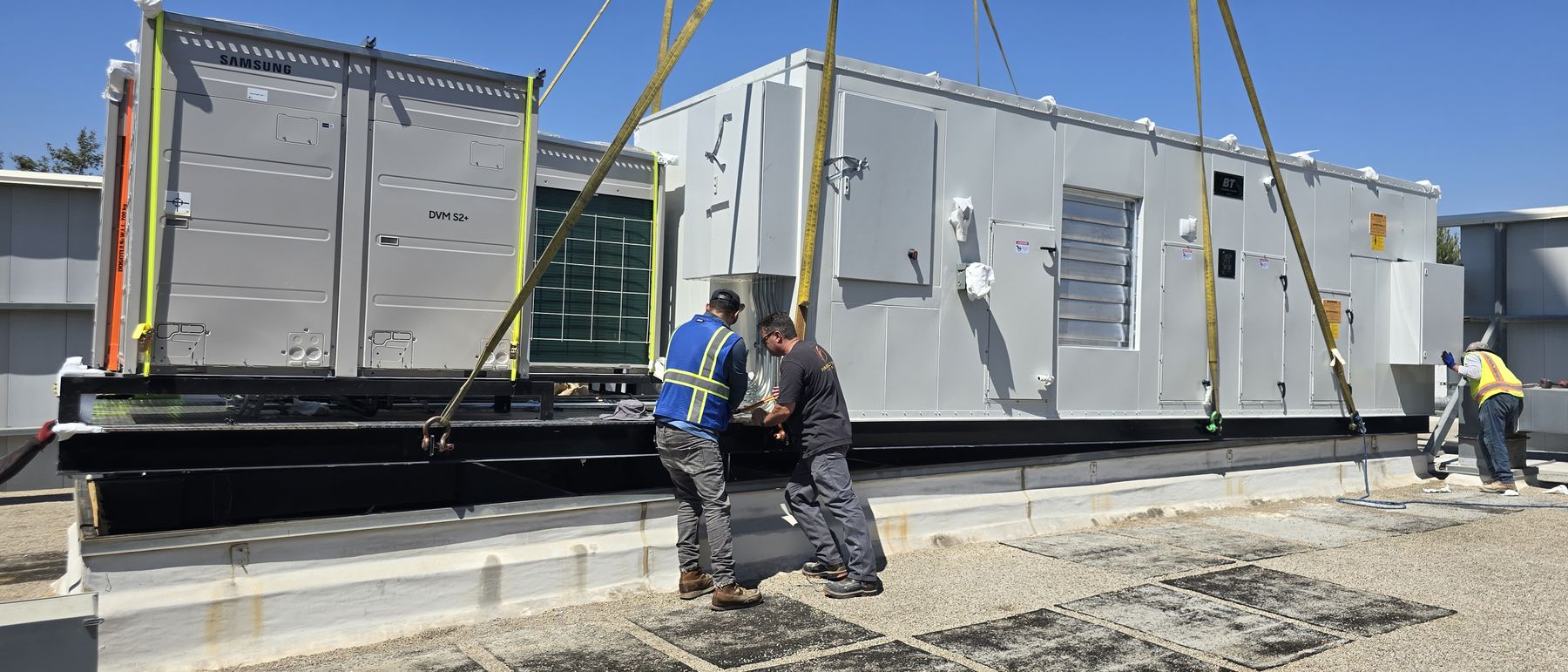
Existing curbs · Existing ducts · A planned transition
01 / WHAT LOW IMPACT MEANS
Decarbonization is the destination. How you get there determines whether the project happens.
VRX’s approach is to replace fossil-fuel HVAC with electric heat-pump and heat-recovery systems while limiting avoidable demolition, added electrical demand and infrastructure replacement. Start with the building’s constraints, then engineer the transition.
FOUR OWNER PRIORITIES
Select a priority to see how it shapes the project.
Design around existing curbs, ducts and service routes wherever practical. Plan replacement around occupied operations so an HVAC upgrade does not automatically become a major building renovation.
REUSE FIRST. REBUILD WHERE NEEDED.Scope, electrical requirements and savings depend on equipment selection and the existing building. Each project starts with an engineering review.
02 / THE GLOBAL PICTURE
Electrification connects climate goals with a wider economic need: efficient buildings, reliable power and infrastructure that can support growth.
Clean generation and stronger grids are part of that transition. So is using electricity carefully at the point of demand. Efficient heating, cooling and heat recovery help make that connection practical.
Bring the global story down to your building ↓That makes the way we heat, cool and operate them a meaningful part of the transition.
Source: IEA · Energy Efficiency 2025 ↗Move heat efficiently and recover it where loads overlap. Evaluate operating costs against local rates and actual load profiles.
Align upgrades with equipment replacement cycles and retain infrastructure that continues to serve the building.
Pair electrification with efficiency and demand management. Available electrical capacity belongs in the first conversation.
03 / WHY THE TECHNOLOGY MATTERS
A heat pump moves heat instead of creating all of it through combustion. Heat recovery puts rejected heat to work elsewhere in the building.
Replacing fuel-burning heating can reduce on-site combustion emissions. The overall carbon result depends on system efficiency, electricity supply, refrigerant impacts and how the building operates.
Read the IEA’s heat-pump overview ↗04 / FROM INTENT TO A PROJECT
Identify aging equipment, comfort issues and the work already on the capital plan.
Review curbs, ducts, piping, electrical service and operating constraints.
Match rooftop electrification, heat recovery or modular cooling to the actual load.
YOUR BUILDING IS THE STARTING POINT.
Bring the equipment schedule, electrical limits and replacement plan.
We’ll help identify the practical next step.