VRX Technologies
Modular HydroCore plant equipment

WSHP Electrification · Heating, Cooling & Hot Water

Keep your heat pumps. Retire the gas.

Your water-source heat pumps are already electric. The gas is in the plant that holds their loop: a boiler for winter, a cooling tower for summer, and a separate water heater down the hall. VRX replaces all three with one electric plant and leaves the heat pumps in place.

3 → 1
Tower, boiler and water heater become one plant
No gas
For loop heating or domestic hot water
No tower
And no tower water treatment program
Kept
Existing heat pumps and loop piping

01 / Today

The heat pumps are electric. The loop is not.

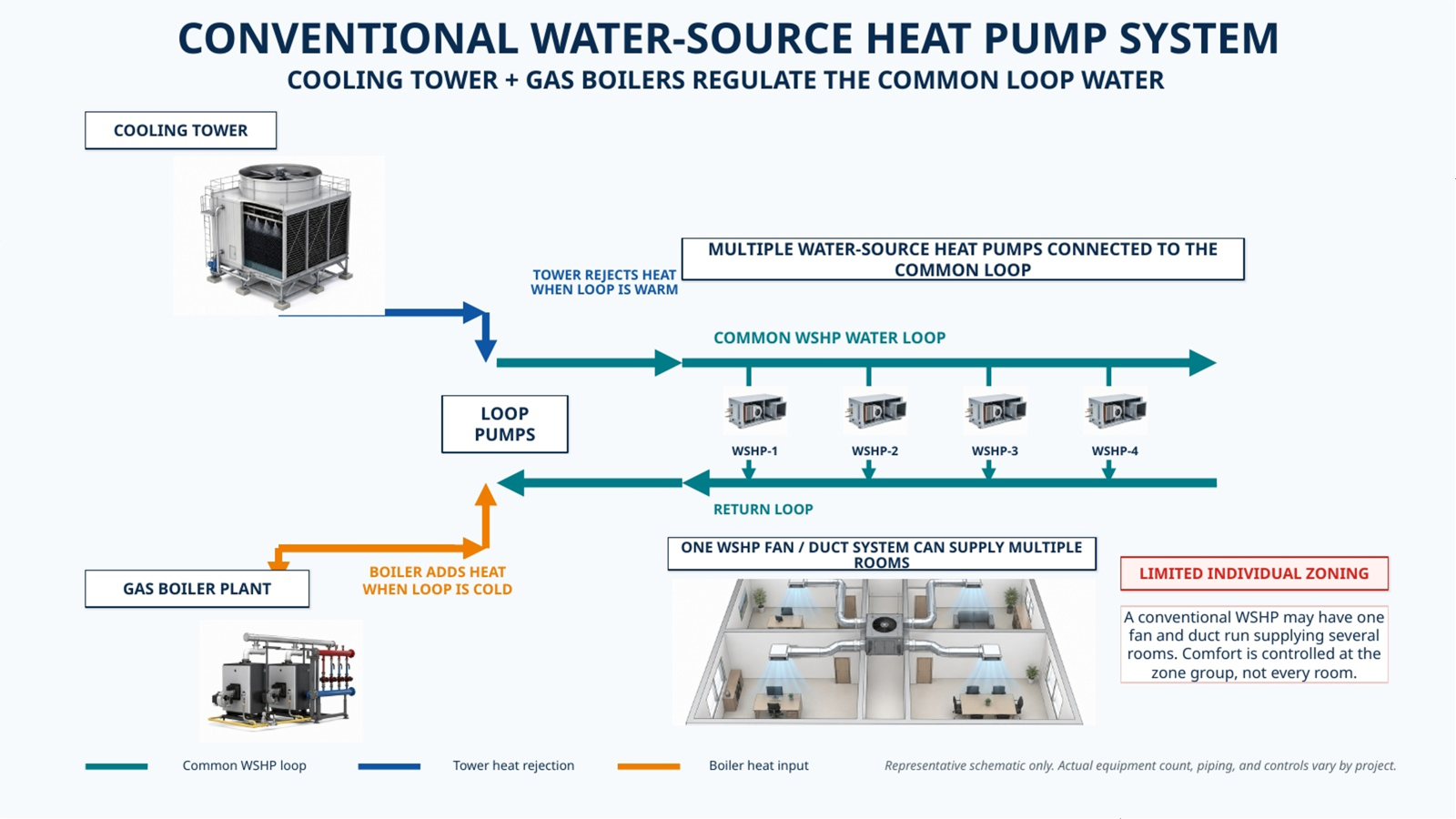
In a conventional water-source heat pump building, every unit connects to a common water loop. When the loop runs warm, a cooling tower rejects the heat outdoors. When it runs cold, a gas boiler adds heat back. Domestic hot water usually comes from a separate gas-fired heater.

That means a building full of heat pumps can still depend on three combustion or water-treatment plants, each with its own service contract, and it throws heat away in one place while it burns gas to make heat in another.

Conventional water-source heat pump system: a cooling tower rejects heat when the loop is warm, a gas boiler plant adds heat when the loop is cold, and loop pumps circulate water to multiple heat pumps
Conventional WSHP building — cooling tower and gas boilers hold the common loop

02 / What leaves the building

Three plants become one.

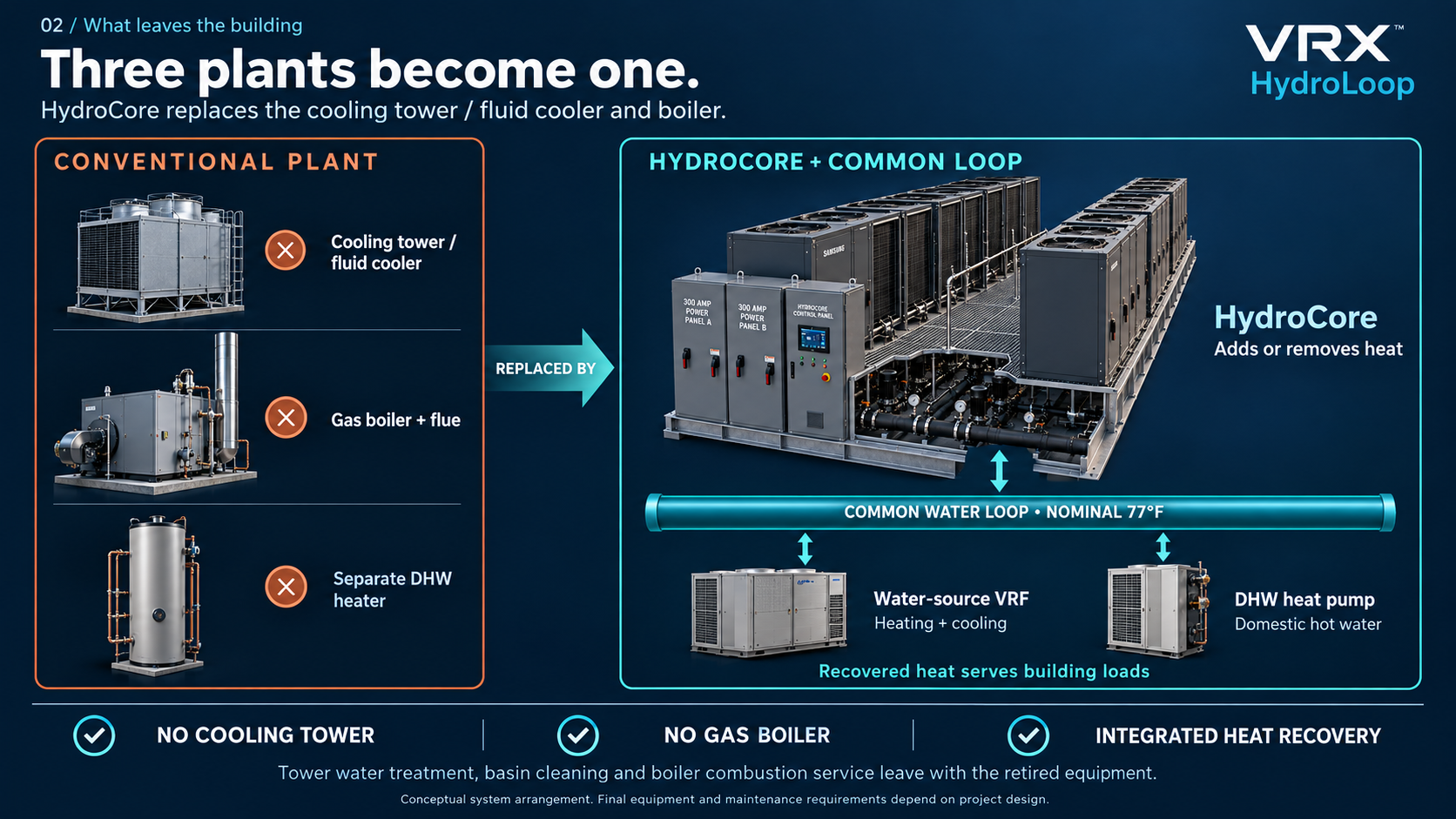
HydroCore takes over the job the tower and boiler shared: holding the common loop at a nominal 77°F, adding or removing heat as the building needs it. A water-to-water heat pump makes domestic hot water from the same loop.

The existing heat pumps stay connected to the loop they are already on. The tower, its water treatment and basin cleaning, the boiler, its flue and combustion service, and the separate water heater leave with the retired equipment.

Existing heat pumpsStay in place
Cooling tower / fluid coolerReplaced by HydroCore
Gas boiler and flueReplaced by HydroCore
Separate DHW heaterDHW heat pump on the loop
Heating, cooling, hot waterOne loop
HydroCore replaces the cooling tower or fluid cooler, the gas boiler and the separate domestic hot water heater, with a common water loop serving water-source heat pumps and a domestic hot water heat pump
Three plants become one

03 / How the loop works

Heat moves around the building instead of out of it.

Heat pumps in cooling mode reject heat into the loop. Heat pumps in heating mode, and the domestic hot water heat pump, draw it back out. Much of the time the building trades heat with itself, and HydroCore only trims the difference to hold setpoint, in both heating and cooling seasons.

Summer, the worst season for a gas water heater’s economics, becomes the season with the most recovered heat available for hot water.
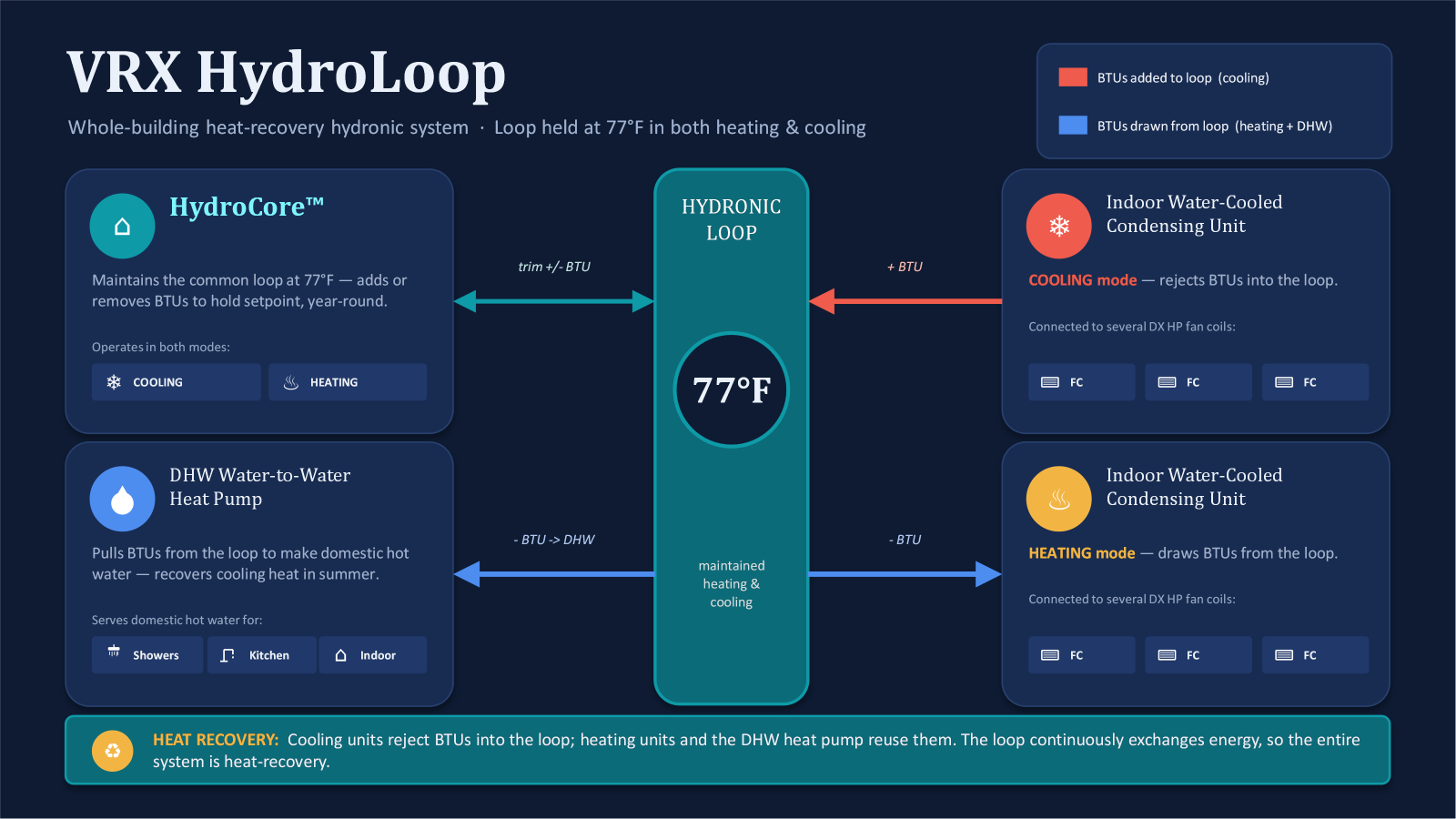
Heat recovery loop held at 77 degrees Fahrenheit: HydroCore trims heat in or out, units in cooling mode add heat to the loop, units in heating mode and the domestic hot water heat pump draw heat from it
One loop, held at 77°F — cooling adds heat, heating and hot water take it back
Fuel

No gas on the loop

Loop heating and hot water are both electric. The gas service, flue and combustion inspections can come off the building.

Water

No tower to treat

No evaporative tower means no chemical program, no drift and no basin cleaning.

Scope

Plant-room work

The heat pumps and their loop piping stay, so most of the work happens at the plant rather than in occupied space.
04 / The plant

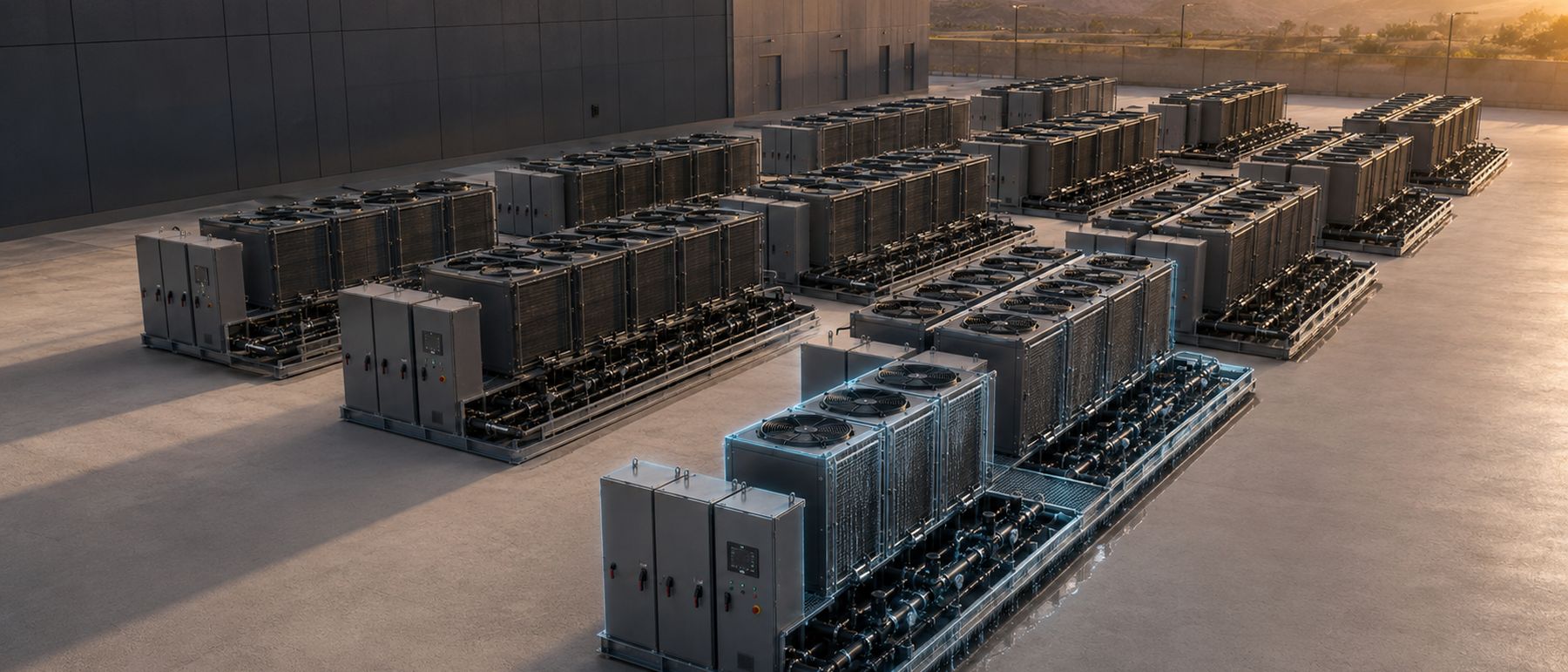
VRX HydroCore hydronic package.

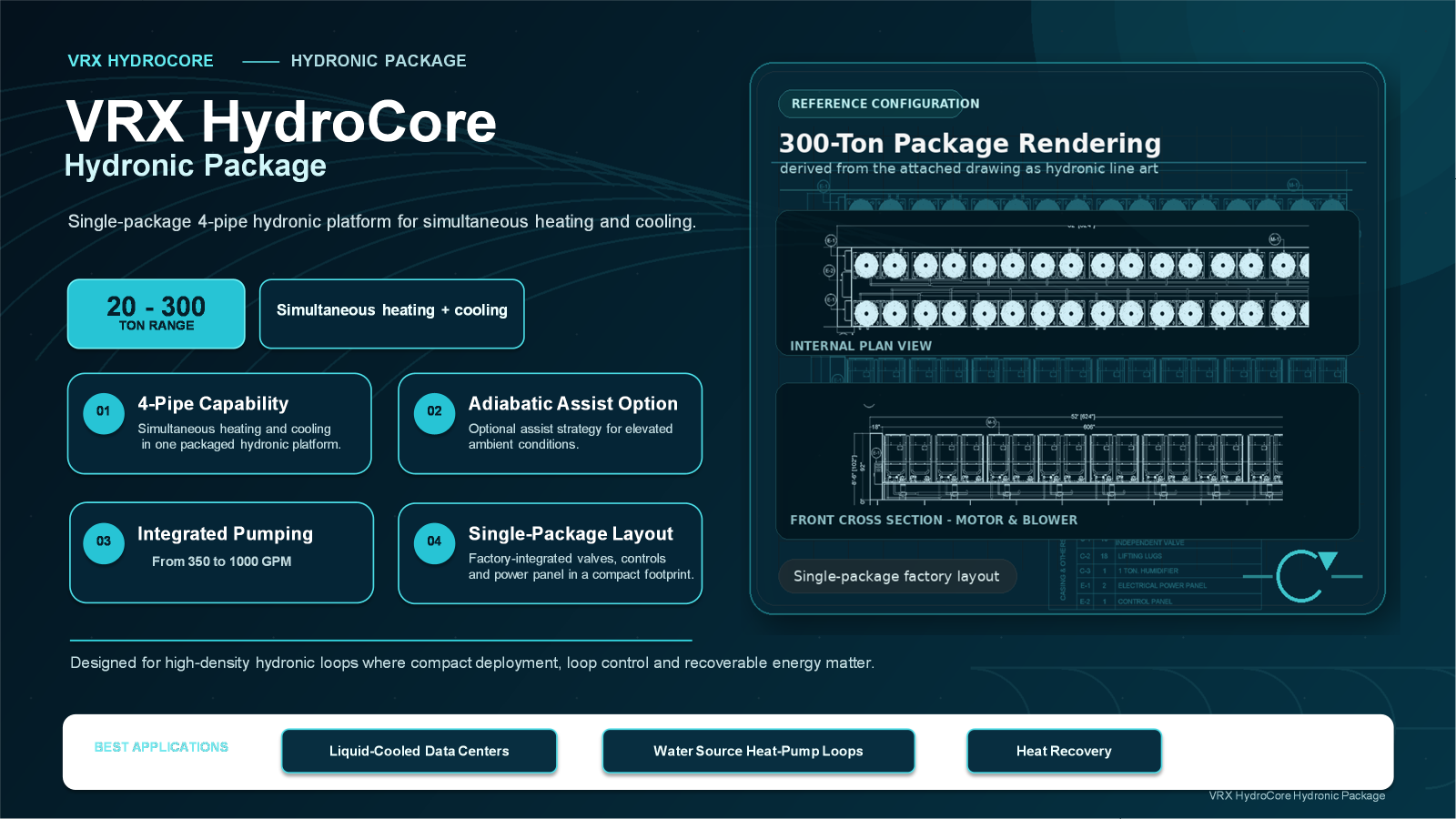
A single-package, 4-pipe hydronic platform for simultaneous heating and cooling, with factory-integrated valves, pumping, controls and power panel in a compact footprint.

HydroCore is the same platform behind our data center cooling. Selection is made against your loop flow, your heating and cooling balance, and your hot water profile.

Capacity range20–300 tons
Integrated pumping350–1,000 GPM
Piping4-pipe capable
High-ambient supportAdiabatic assist option
VRX HydroCore hydronic package: 20 to 300 ton range, 4-pipe capability, adiabatic assist option, integrated pumping from 350 to 1000 GPM, single-package layout, with plan and cross-section drawings
VRX HydroCore hydronic package — reference configuration

05 / Sound

A quieter roof than the tower it replaces.

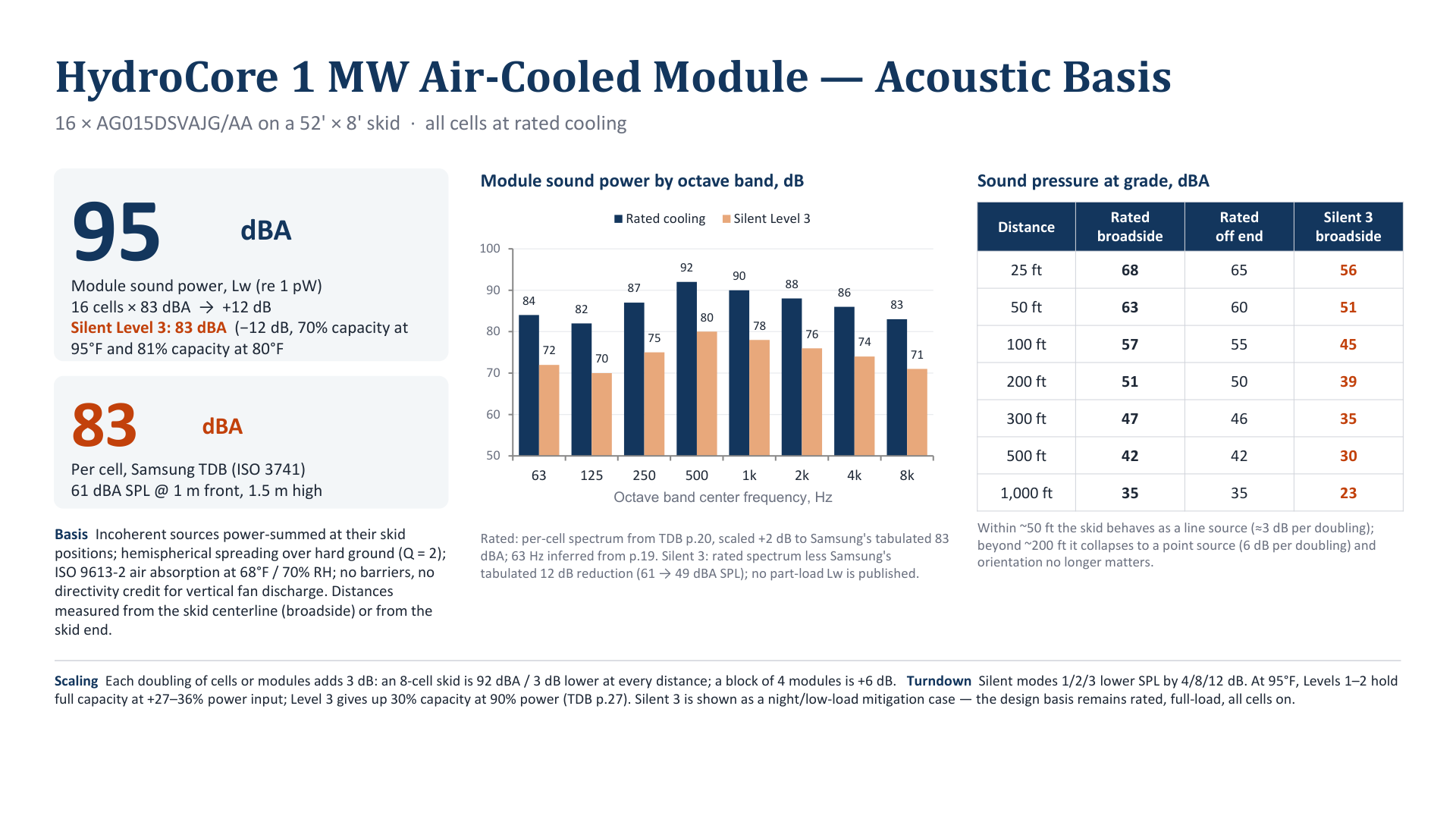
Removing a cooling tower takes its fan and falling-water noise with it. HydroCore sound is modeled from Samsung’s published per-cell data, so the neighbors and the reviewer can see the numbers before anything is set on the roof.

The acoustic basis below is for a full 1 MW HydroCore module, 16 cells on a 52′ × 8′ skid, all cells at rated cooling. Smaller building plants use fewer cells, and each halving of cells is 3 dB lower at every distance. Silent modes reduce sound further at reduced capacity.

HydroCore 1 MW air-cooled module acoustic basis: 95 dBA module sound power, 83 dBA per cell, octave-band sound power, and sound pressure at grade from 25 to 1,000 feet for rated and Silent Level 3 operation
HydroCore 1 MW module — acoustic basis (modeled)

06 / Where it fits

Heat pump buildings with a gas plant at end of life.

Hospitality

Hotels & resorts

Guest-room heat pumps stay, and showers run on heat the building is already rejecting.

Residential

Multifamily & senior living

Take the tower and gas service off the property without re-work in every unit.

Commercial

Offices & schools

Perimeter and interior in opposite modes share heat across the same loop.

Mission critical

Data centers

The same HydroCore platform serves liquid-cooled and heat-recovery loops. See data centers.

Want room-by-room control too? VRX HydroLoop goes further, replacing ducted zone groups with individual room fan coils on the same 77°F loop.

07 / Written for the reviewer

Checked against the heat pumps you already have.

Every conversion starts with the existing equipment: heat pump model and rated entering-water range, loop flow and pumping, the building’s heating and cooling balance, and its hot water demand.

This is a conceptual arrangement. Final equipment, electrical service and maintenance requirements depend on project design. We will not tell you a project is code‑compliant; every project needs its own engineering validation and authority review.

Existing WSHP compatibilityUnit-by-unit review
Loop balance & heat recoveryYour load profile
Domestic hot water sizingProject‑specific
Energy‑code pathway analysis90.1 / T24

Tell us what holds your loop today.

Send the heat pump schedule, the tower and boiler nameplates and the water heater. We will tell you what HydroCore replaces and what leaves the building.